Neighborhood Overview
Defined by a Park at Its Center
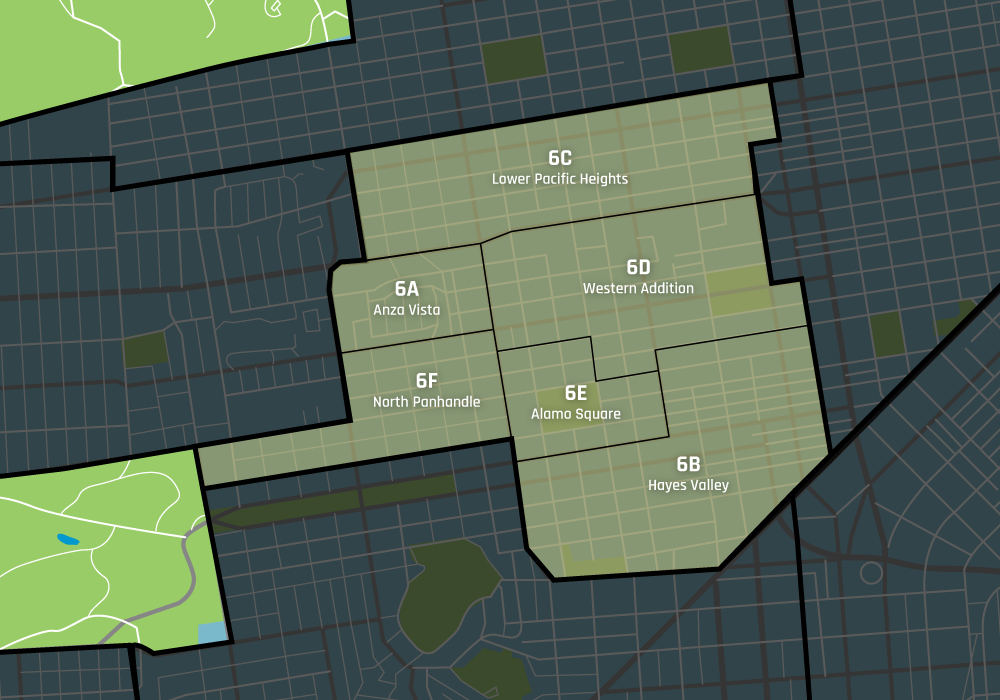
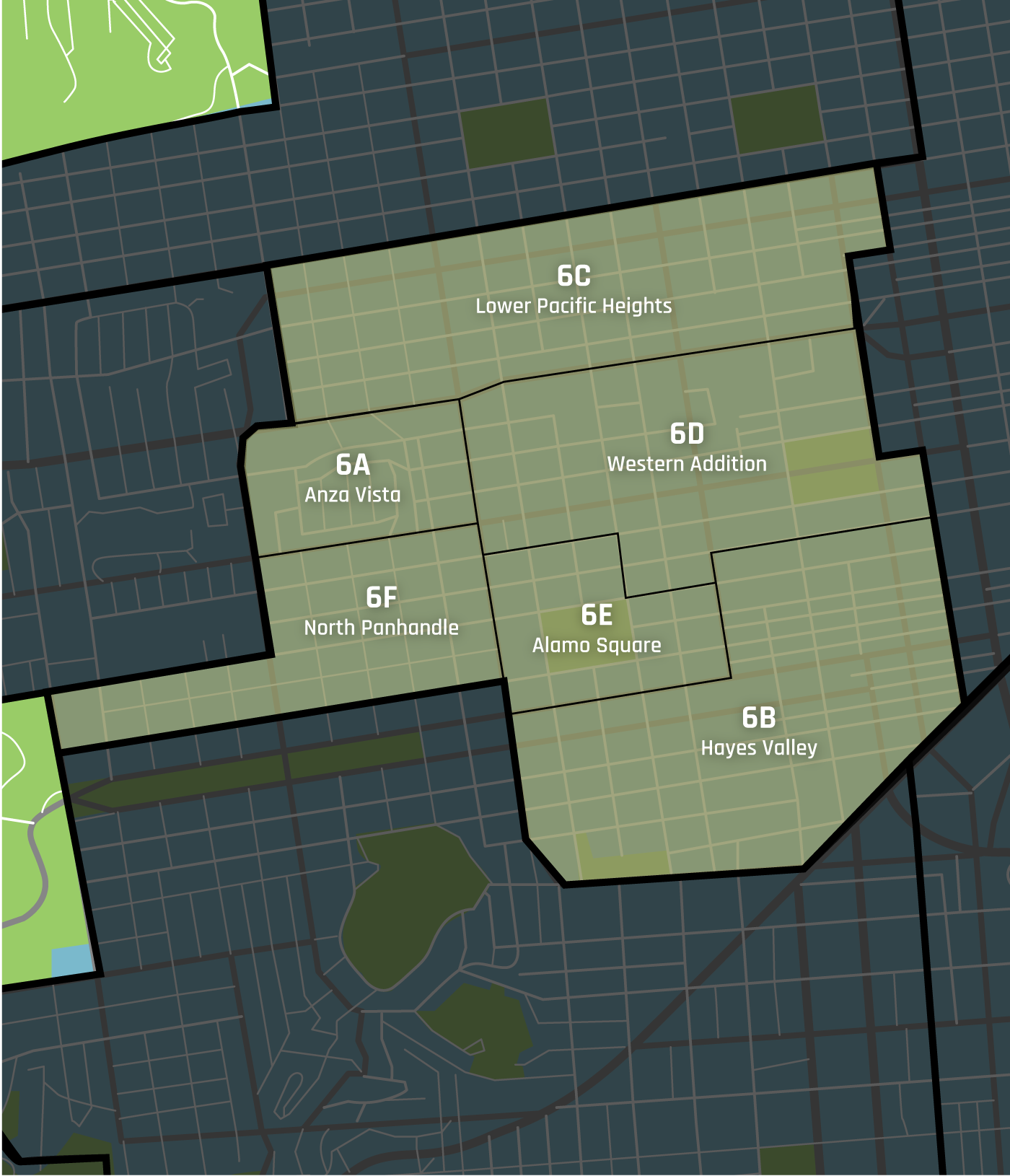
Alamo Square centers around its namesake park, but the surrounding streets carry equal weight. The neighborhood blends classic San Francisco architecture with a steady residential rhythm, sitting between more active corridors without taking on their intensity. It’s defined by proximity—close to everything, but still contained.
Field Notes
Where the Park Sets the Tone
Alamo Square Park isn’t just a landmark—it organizes the neighborhood. The open space, elevation, and views create a natural focal point, with homes and streets oriented around it.
On the north and east sides, the Painted Ladies draw consistent attention, but step just a block away and the tone shifts. Residential streets like Steiner, Scott, and Pierce settle into a quieter pattern, with a mix of restored Victorians and more understated buildings.
Divisadero Street forms the western edge, introducing more movement—restaurants, retail, and steady foot traffic. It’s a clear transition point, separating the calm of the interior from the energy of a commercial corridor.
The neighborhood is small, but layered. The park defines it, the edges activate it, and the interior holds it together.