Pacific Heights

A structured, elevated neighborhood where the blocks themselves set the tone

Neighborhood Overview

Defined by Elevation, Scale, and Outlook

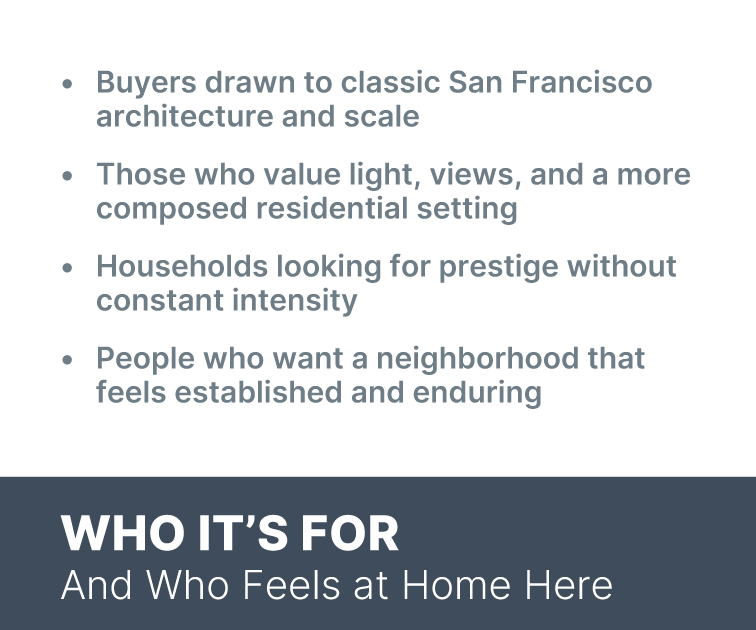
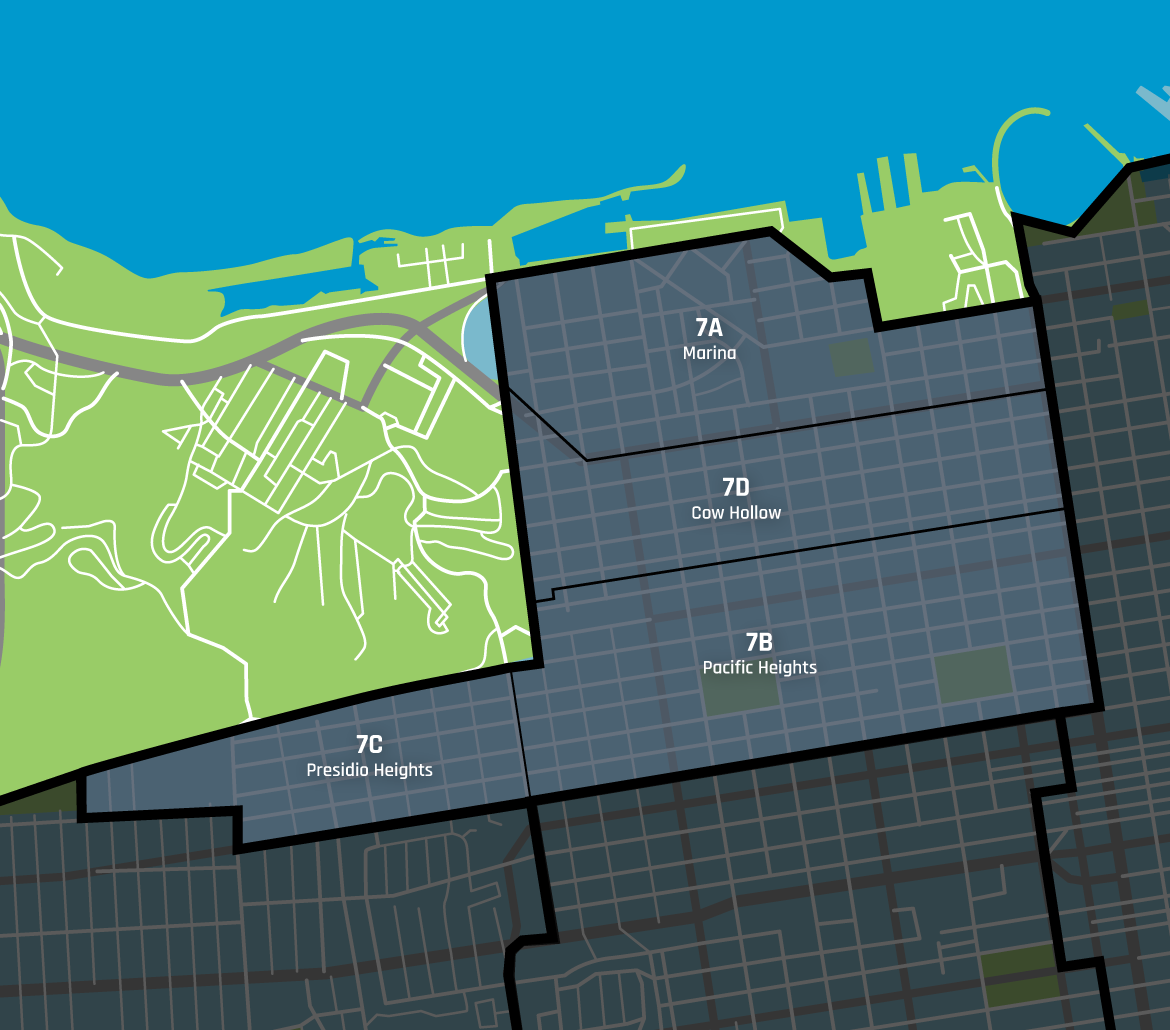
Pacific Heights is one of San Francisco’s most established residential neighborhoods, shaped by elevation, architecture, and a strong sense of order. Broad streets, substantial homes, and long views give the area a composed, deliberate feel. Even with active corridors nearby, the neighborhood itself remains relatively calm. It’s a part of the city where scale and setting still carry real weight.

Field Notes

The Character Is in the Blocks

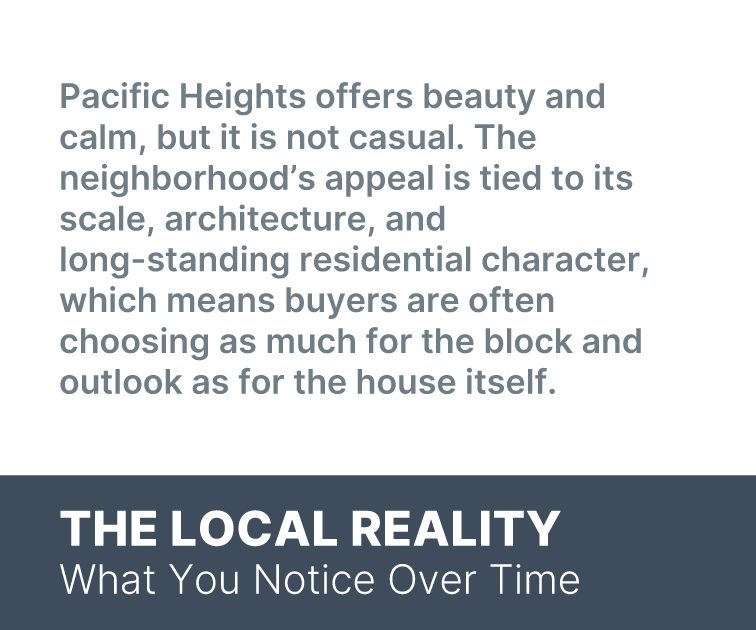
Pacific Heights feels different the moment the streets begin to rise. The blocks are wider, the homes carry more presence, and the neighborhood opens outward in a way that’s less common elsewhere in the city. From many points, the views do part of the work — bay, light, distance, and sky all register more clearly here.

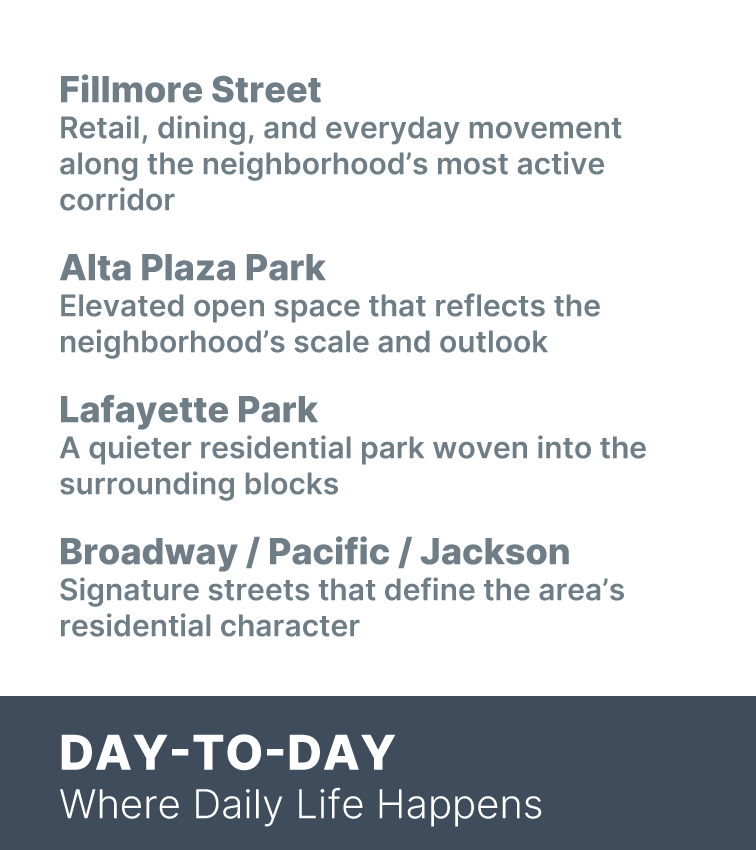
The residential core is what defines it most. Streets like Broadway, Pacific, and Jackson feel structured and intentional, with a rhythm shaped by larger lots, consistent architecture, and long-held ownership. Even where individual buildings vary, the overall impression stays cohesive.

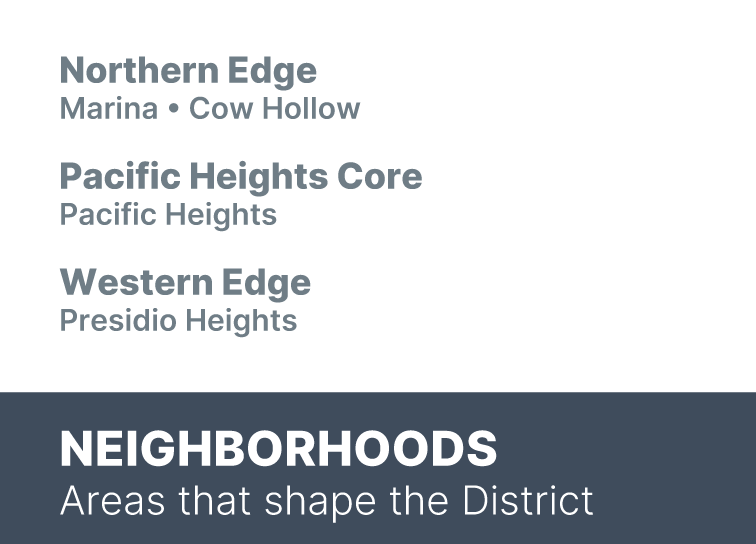
At the edges, the neighborhood starts to loosen. Fillmore Street introduces more movement, with restaurants, retail, and a steady day-to-day pulse, while Lafayette and Alta Plaza parks give the area open space without changing its tone. The result is a neighborhood that feels established rather than busy — visually rich, but rarely chaotic.

Pacific Heights is less about one focal point than a sustained standard. The blocks, the elevation, and the way the neighborhood holds itself together are what make it distinct.

Neighborhood Overview

Defined by Elevation, Scale, and Outlook

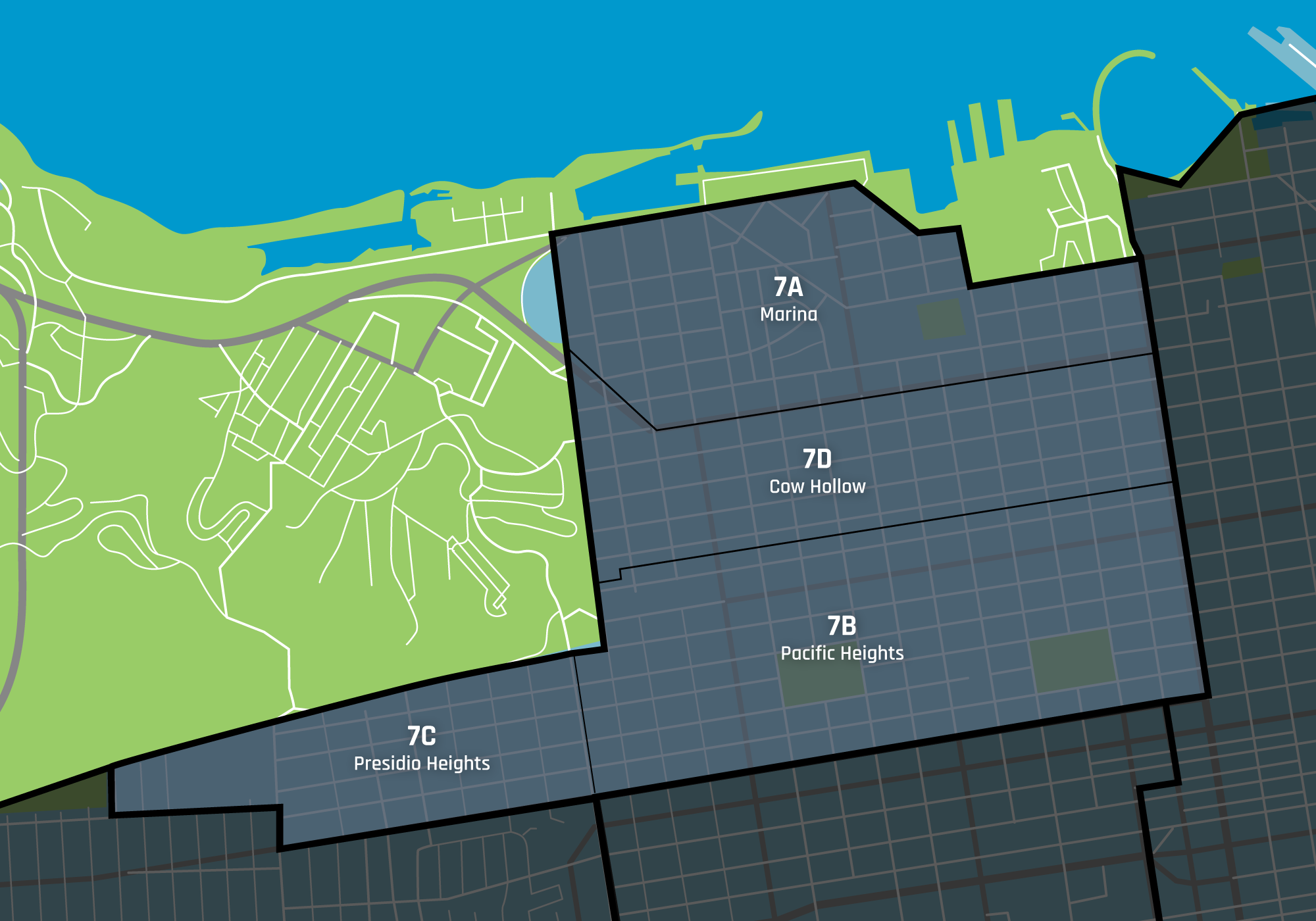
Pacific Heights is one of San Francisco’s most established residential neighborhoods, shaped by elevation, architecture, and a strong sense of order. Broad streets, substantial homes, and long views give the area a composed, deliberate feel. Even with active corridors nearby, the neighborhood itself remains relatively calm. It’s a part of the city where scale and setting still carry real weight.

Field Notes

The Character Is in the Blocks

Pacific Heights feels different the moment the streets begin to rise. The blocks are wider, the homes carry more presence, and the neighborhood opens outward in a way that’s less common elsewhere in the city. From many points, the views do part of the work — bay, light, distance, and sky all register more clearly here.

The residential core is what defines it most. Streets like Broadway, Pacific, and Jackson feel structured and intentional, with a rhythm shaped by larger lots, consistent architecture, and long-held ownership. Even where individual buildings vary, the overall impression stays cohesive.

At the edges, the neighborhood starts to loosen. Fillmore Street introduces more movement, with restaurants, retail, and a steady day-to-day pulse, while Lafayette and Alta Plaza parks give the area open space without changing its tone. The result is a neighborhood that feels established rather than busy — visually rich, but rarely chaotic.

Pacific Heights is less about one focal point than a sustained standard. The blocks, the elevation, and the way the neighborhood holds itself together are what make it distinct.