
SF From the Inside

San Francisco looks small on a map, but it’s a city of distinct districts

Why Districts Matter

San Francisco looks compact on a map, but it behaves like a collection of overlapping micro-markets. Elevation, fog, transit lines, housing types, and even wind patterns shape how neighborhoods feel — and how real estate moves within them. A few blocks can mean the difference between a calm, residential rhythm and something far more urban, between long-term ownership and constant turnover.

Kevin uses districts to make that complexity usable—turning overlapping patterns into decisions buyers and sellers can actually act on.Not as rigid boundaries, but as working groupings — areas that share similar housing stock, buyer behavior, pricing patterns, and daily life. Districts help explain why two homes with similar square footage can behave very differently on the market, or why timing matters more in one part of the city than another.

This page is designed to help you get oriented. It starts with a city-wide view of San Francisco’s major districts, then zooms in on broader areas like the West Side, Central neighborhoods, and the North and East. From there, each section introduces the character of those areas — how they feel, how they live, and what’s typical from a real estate perspective.
If you want to go deeper, each district links to a full District Survey in the knowledge base. Those longer pieces explore neighborhoods block by block, covering housing types, architecture, pricing behavior, and the kinds of buyers and sellers who tend to meet there.

The Lay of the Land

Explore the City by District

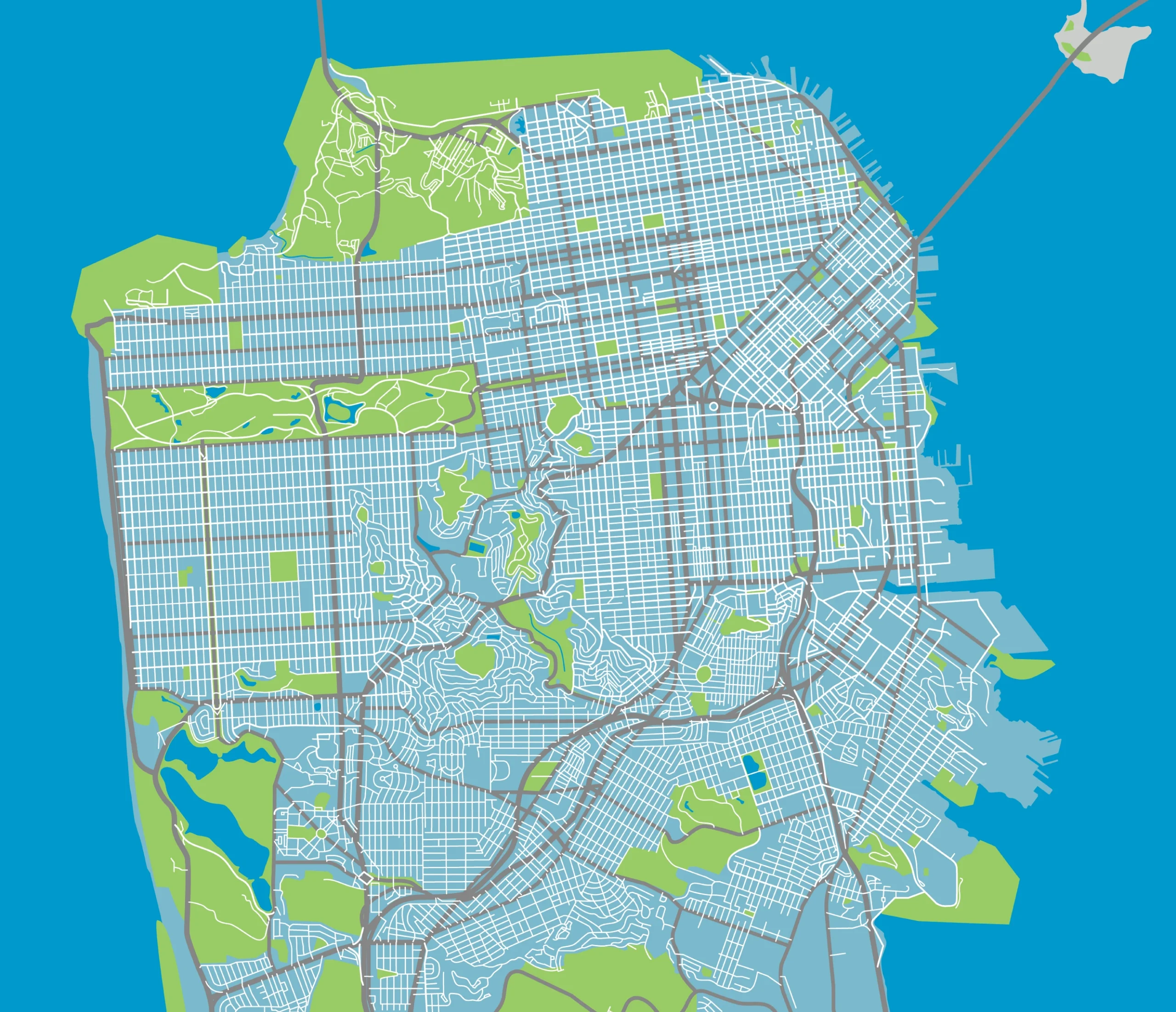
The map is the fastest way to see how these patterns play out across the city — and why each district highlights something different in how San Francisco works: where homes tend to trade, how neighborhoods connect, and where similar properties can perform very differently.

Use this as a set of lenses. Start broad, then zoom into areas that feel relevant. From there, each district section opens into a deeper breakdown of how that part of the city actually behaves.

RICHMOND

SUNSET

SOUTHWEST

MIRALOMA

CENTRAL

ALAMO

PACIFIC HEIGHTS

NORTH

SOUTHBEACH

BAYVIEW

Richmond Facts at a Glance

Vibe

  • Lived-in and quietly busy
  • Neighborhood energy without feeling hectic
  • More “out living your life” than “showing it off”
  • Calmer residential streets balanced by active corridors

Market Behavior

  • Steady demand rather than frenzy
  • Buyers tend to be practical and value-oriented
  • Preparation and pricing matter more than hype
  • Homes attract serious, long-term buyers rather than speculators

Housing Stock

  • Predominantly single-family homes
  • Early–mid 20th century builds (Edwardian/Marina-style)
  • Consistent block-to-block feel with subtle architectural variation
  • Fewer dramatic remodels than, but lots of well-kept homes

Daily Life

  • Active commercial spines like Geary provide convenience
  • Quieter side streets offer a slower, residential rhythm
  • Easy access to Golden Gate Park for exercise and recreation
  • True neighborhood hubs for errands, food, and community

Pricing Patterns / Value Logic

  • Pricing differences are often driven by light, location, and layout
  • Homes priced for “potential” tend to linger longer than expected
  • Well-prepared listings cluster tightly around market value
  • Small condition gaps can drive big price swings

Who Buys Here

  • Buyers tend to prioritize livability and long-term fit
  • Many buyers are moving laterally within the city
  • First-time buyers are present but often deliberate and cautious
  • Space, light, and daily usability matter most

Who Sells Here

  • Many sellers are long-term owners rather than investors
  • Sales are often driven by life transitions rather than speculation
  • Sellers tend to be realistic once market feedback is clear
  • Preparation decisions have a strong influence on outcomes

Common Misconceptions / Trade-offs

  • The area can appear quieter than it actually feels day to day
  • Block-to-block variation matters more than outsiders expect
  • Homes that “check every box” are rarer than listings suggest
  • Buyers who understand the trade-offs tend to stay longer

The Richmond District

The Richmond · Sea Cliff · Jordan Park · Lake Street • Laurel Heights • Lone Mountain

Field Notes

The Richmond is a neighborhood of layers. On Geary, things move fast—buses, takeout counters, people getting where they’re going. A few blocks away, everything slows down. That contrast is the point. It’s one of the places in San Francisco where you can feel the city doing two things at once: moving forward, and settling in.

There’s a stretch of Clement Street where the neighborhood shows itself without trying—produce spilling out onto the sidewalk, the farmers market humming on weekends, people ducking in for groceries they actually plan to cook. It’s practical, in a good way. This is a part of the city where homes are lived in, not staged for effect, and where buyers tend to care as much about the rhythm of the block as they do the square footage.

When I’m here, I’ll sometimes grab a hot sandwich at La Promenade Café—the kind of place that hasn’t been “rediscovered” because it never needed to be—and walk it off browsing Balboa Street’s shops. The Balboa Theatre still feels like a neighborhood secret, especially on nights when they’re screening an old Hitchcock film and the line includes people who clearly planned their whole evening around it.

And when the city starts to feel like a lot, Golden Gate Park is right there—less of an attraction and more of a release valve. You can disappear into it for an hour, hit Land’s End for air and space, and come back without ever feeling like you left the neighborhood. That access to quiet, to green, to margin—that’s a big part of why people stay.

From a real estate perspective, the Richmond tends to reward buyers who value balance. You’ll see a mix of classic architecture, long-held homes, and thoughtful updates—less flash, more intention. It’s not about chasing the loudest version of San Francisco. It’s about finding a place that works day after day, and still feels like yours years down the line.

Sunset / Parkside Facts at a Glance

Vibe

  • Lived-in and quietly busy
  • Neighborhood energy without feeling hectic
  • More “out living your life” than “showing it off”
  • Calmer residential streets balanced by active corridors

Market Behavior

  • Steady demand rather than frenzy
  • Buyers tend to be practical and value-oriented
  • Preparation and pricing matter more than hype
  • Homes attract serious, long-term buyers rather than speculators

Housing Stock

  • Predominantly single-family homes
  • Early–mid 20th century builds (Edwardian/Marina-style)
  • Consistent block-to-block feel with subtle architectural variation
  • Fewer dramatic remodels than, but lots of well-kept homes

Daily Life

  • Active commercial spines like Geary provide convenience
  • Quieter side streets offer a slower, residential rhythm
  • Easy access to Golden Gate Park for exercise and recreation
  • True neighborhood hubs for errands, food, and community

Pricing Patterns / Value Logic

  • Pricing differences are often driven by light, location, and layout
  • Homes priced for “potential” tend to linger longer than expected
  • Well-prepared listings cluster tightly around market value
  • Small condition gaps can drive big price swings

Who Buys Here

  • Buyers tend to prioritize livability and long-term fit
  • Many buyers are moving laterally within the city
  • First-time buyers are present but often deliberate and cautious
  • Space, light, and daily usability matter most

Who Sells Here

  • Many sellers are long-term owners rather than investors
  • Sales are often driven by life transitions rather than speculation
  • Sellers tend to be realistic once market feedback is clear
  • Preparation decisions have a strong influence on outcomes

Common Misconceptions / Trade-offs

  • The area can appear quieter than it actually feels day to day
  • Block-to-block variation matters more than outsiders expect
  • Homes that “check every box” are rarer than listings suggest
  • Buyers who understand the trade-offs tend to stay longer

Sunset / Parkside District

Outer Sunset • Inner Sunset

Field Notes

The Richmond is a neighborhood of layers. On Geary, things move fast—buses, takeout counters, people getting where they’re going. A few blocks away, everything slows down. That contrast is the point. It’s one of the places in San Francisco where you can feel the city doing two things at once: moving forward, and settling in.

There’s a stretch of Clement Street where the neighborhood shows itself without trying—produce spilling out onto the sidewalk, the farmers market humming on weekends, people ducking in for groceries they actually plan to cook. It’s practical, in a good way. This is a part of the city where homes are lived in, not staged for effect, and where buyers tend to care as much about the rhythm of the block as they do the square footage.

When I’m here, I’ll sometimes grab a hot sandwich at La Promenade Café—the kind of place that hasn’t been “rediscovered” because it never needed to be—and walk it off browsing Balboa Street’s shops. The Balboa Theatre still feels like a neighborhood secret, especially on nights when they’re screening an old Hitchcock film and the line includes people who clearly planned their whole evening around it.

And when the city starts to feel like a lot, Golden Gate Park is right there—less of an attraction and more of a release valve. You can disappear into it for an hour, hit Land’s End for air and space, and come back without ever feeling like you left the neighborhood. That access to quiet, to green, to margin—that’s a big part of why people stay.

From a real estate perspective, the Richmond tends to reward buyers who value balance. You’ll see a mix of classic architecture, long-held homes, and thoughtful updates—less flash, more intention. It’s not about chasing the loudest version of San Francisco. It’s about finding a place that works day after day, and still feels like yours years down the line.

Southwest Facts at a Glance

Vibe

  • Lived-in and quietly busy
  • Neighborhood energy without feeling hectic
  • More “out living your life” than “showing it off”
  • Calmer residential streets balanced by active corridors

Market Behavior

  • Steady demand rather than frenzy
  • Buyers tend to be practical and value-oriented
  • Preparation and pricing matter more than hype
  • Homes attract serious, long-term buyers rather than speculators

Housing Stock

  • Predominantly single-family homes
  • Early–mid 20th century builds (Edwardian/Marina-style)
  • Consistent block-to-block feel with subtle architectural variation
  • Fewer dramatic remodels than, but lots of well-kept homes

Daily Life

  • Active commercial spines like Geary provide convenience
  • Quieter side streets offer a slower, residential rhythm
  • Easy access to Golden Gate Park for exercise and recreation
  • True neighborhood hubs for errands, food, and community

Pricing Patterns / Value Logic

  • Pricing differences are often driven by light, location, and layout
  • Homes priced for “potential” tend to linger longer than expected
  • Well-prepared listings cluster tightly around market value
  • Small condition gaps can drive big price swings

Who Buys Here

  • Buyers tend to prioritize livability and long-term fit
  • Many buyers are moving laterally within the city
  • First-time buyers are present but often deliberate and cautious
  • Space, light, and daily usability matter most

Who Sells Here

  • Many sellers are long-term owners rather than investors
  • Sales are often driven by life transitions rather than speculation
  • Sellers tend to be realistic once market feedback is clear
  • Preparation decisions have a strong influence on outcomes

Common Misconceptions / Trade-offs

  • The area can appear quieter than it actually feels day to day
  • Block-to-block variation matters more than outsiders expect
  • Homes that “check every box” are rarer than listings suggest
  • Buyers who understand the trade-offs tend to stay longer

The Southwest

Merced Heights · Ingleside Terrace & Heights · Stonestown · Pine Lake Park · Lakeside · Lakeshore · Oceanview

Field Notes

The Richmond is a neighborhood of layers. On Geary, things move fast—buses, takeout counters, people getting where they’re going. A few blocks away, everything slows down. That contrast is the point. It’s one of the places in San Francisco where you can feel the city doing two things at once: moving forward, and settling in.

There’s a stretch of Clement Street where the neighborhood shows itself without trying—produce spilling out onto the sidewalk, the farmers market humming on weekends, people ducking in for groceries they actually plan to cook. It’s practical, in a good way. This is a part of the city where homes are lived in, not staged for effect, and where buyers tend to care as much about the rhythm of the block as they do the square footage.

When I’m here, I’ll sometimes grab a hot sandwich at La Promenade Café—the kind of place that hasn’t been “rediscovered” because it never needed to be—and walk it off browsing Balboa Street’s shops. The Balboa Theatre still feels like a neighborhood secret, especially on nights when they’re screening an old Hitchcock film and the line includes people who clearly planned their whole evening around it.

And when the city starts to feel like a lot, Golden Gate Park is right there—less of an attraction and more of a release valve. You can disappear into it for an hour, hit Land’s End for air and space, and come back without ever feeling like you left the neighborhood. That access to quiet, to green, to margin—that’s a big part of why people stay.

From a real estate perspective, the Richmond tends to reward buyers who value balance. You’ll see a mix of classic architecture, long-held homes, and thoughtful updates—less flash, more intention. It’s not about chasing the loudest version of San Francisco. It’s about finding a place that works day after day, and still feels like yours years down the line.

Miraloma Facts at a Glance

Vibe

  • Lived-in and quietly busy
  • Neighborhood energy without feeling hectic
  • More “out living your life” than “showing it off”
  • Calmer residential streets balanced by active corridors

Market Behavior

  • Steady demand rather than frenzy
  • Buyers tend to be practical and value-oriented
  • Preparation and pricing matter more than hype
  • Homes attract serious, long-term buyers rather than speculators

Housing Stock

  • Predominantly single-family homes
  • Early–mid 20th century builds (Edwardian/Marina-style)
  • Consistent block-to-block feel with subtle architectural variation
  • Fewer dramatic remodels than, but lots of well-kept homes

Daily Life

  • Active commercial spines like Geary provide convenience
  • Quieter side streets offer a slower, residential rhythm
  • Easy access to Golden Gate Park for exercise and recreation
  • True neighborhood hubs for errands, food, and community

Pricing Patterns / Value Logic

  • Pricing differences are often driven by light, location, and layout
  • Homes priced for “potential” tend to linger longer than expected
  • Well-prepared listings cluster tightly around market value
  • Small condition gaps can drive big price swings

Who Buys Here

  • Buyers tend to prioritize livability and long-term fit
  • Many buyers are moving laterally within the city
  • First-time buyers are present but often deliberate and cautious
  • Space, light, and daily usability matter most

Who Sells Here

  • Many sellers are long-term owners rather than investors
  • Sales are often driven by life transitions rather than speculation
  • Sellers tend to be realistic once market feedback is clear
  • Preparation decisions have a strong influence on outcomes

Common Misconceptions / Trade-offs

  • The area can appear quieter than it actually feels day to day
  • Block-to-block variation matters more than outsiders expect
  • Homes that “check every box” are rarer than listings suggest
  • Buyers who understand the trade-offs tend to stay longer

Miraloma & the Southwest Hills

Balboa Terrace · Diamond Heights · Forest Hill · Forest Hill Knolls · Forest Hill Extension · Ingleside · Midtown Terrace · St. Francis Wood · Miraloma Park · Sherwood Forest · Monterey Heights · Mount Davidson Manor · Westwood Highlands · Westwood Park · Sunnyside · West Portal

Field Notes

The Richmond is a neighborhood of layers. On Geary, things move fast—buses, takeout counters, people getting where they’re going. A few blocks away, everything slows down. That contrast is the point. It’s one of the places in San Francisco where you can feel the city doing two things at once: moving forward, and settling in.

There’s a stretch of Clement Street where the neighborhood shows itself without trying—produce spilling out onto the sidewalk, the farmers market humming on weekends, people ducking in for groceries they actually plan to cook. It’s practical, in a good way. This is a part of the city where homes are lived in, not staged for effect, and where buyers tend to care as much about the rhythm of the block as they do the square footage.

When I’m here, I’ll sometimes grab a hot sandwich at La Promenade Café—the kind of place that hasn’t been “rediscovered” because it never needed to be—and walk it off browsing Balboa Street’s shops. The Balboa Theatre still feels like a neighborhood secret, especially on nights when they’re screening an old Hitchcock film and the line includes people who clearly planned their whole evening around it.

And when the city starts to feel like a lot, Golden Gate Park is right there—less of an attraction and more of a release valve. You can disappear into it for an hour, hit Land’s End for air and space, and come back without ever feeling like you left the neighborhood. That access to quiet, to green, to margin—that’s a big part of why people stay.

From a real estate perspective, the Richmond tends to reward buyers who value balance. You’ll see a mix of classic architecture, long-held homes, and thoughtful updates—less flash, more intention. It’s not about chasing the loudest version of San Francisco. It’s about finding a place that works day after day, and still feels like yours years down the line.

Central SF Facts at a Glance

Vibe

  • Lived-in and quietly busy
  • Neighborhood energy without feeling hectic
  • More “out living your life” than “showing it off”
  • Calmer residential streets balanced by active corridors

Market Behavior

  • Steady demand rather than frenzy
  • Buyers tend to be practical and value-oriented
  • Preparation and pricing matter more than hype
  • Homes attract serious, long-term buyers rather than speculators

Housing Stock

  • Predominantly single-family homes
  • Early–mid 20th century builds (Edwardian/Marina-style)
  • Consistent block-to-block feel with subtle architectural variation
  • Fewer dramatic remodels than, but lots of well-kept homes

Daily Life

  • Active commercial spines like Geary provide convenience
  • Quieter side streets offer a slower, residential rhythm
  • Easy access to Golden Gate Park for exercise and recreation
  • True neighborhood hubs for errands, food, and community

Pricing Patterns / Value Logic

  • Pricing differences are often driven by light, location, and layout
  • Homes priced for “potential” tend to linger longer than expected
  • Well-prepared listings cluster tightly around market value
  • Small condition gaps can drive big price swings

Who Buys Here

  • Buyers tend to prioritize livability and long-term fit
  • Many buyers are moving laterally within the city
  • First-time buyers are present but often deliberate and cautious
  • Space, light, and daily usability matter most

Who Sells Here

  • Many sellers are long-term owners rather than investors
  • Sales are often driven by life transitions rather than speculation
  • Sellers tend to be realistic once market feedback is clear
  • Preparation decisions have a strong influence on outcomes

Common Misconceptions / Trade-offs

  • The area can appear quieter than it actually feels day to day
  • Block-to-block variation matters more than outsiders expect
  • Homes that “check every box” are rarer than listings suggest
  • Buyers who understand the trade-offs tend to stay longer

Central SF

Noe Valley · Eureka Valley (Castro) · Cole Valley · Haight-Ashbury · Ashbury Heights Buena Vista · Corona Heights · Clarendon Heights · Duboce Triangle · Mission Dolores · Glen Park

Field Notes

The Richmond is a neighborhood of layers. On Geary, things move fast—buses, takeout counters, people getting where they’re going. A few blocks away, everything slows down. That contrast is the point. It’s one of the places in San Francisco where you can feel the city doing two things at once: moving forward, and settling in.

There’s a stretch of Clement Street where the neighborhood shows itself without trying—produce spilling out onto the sidewalk, the farmers market humming on weekends, people ducking in for groceries they actually plan to cook. It’s practical, in a good way. This is a part of the city where homes are lived in, not staged for effect, and where buyers tend to care as much about the rhythm of the block as they do the square footage.

When I’m here, I’ll sometimes grab a hot sandwich at La Promenade Café—the kind of place that hasn’t been “rediscovered” because it never needed to be—and walk it off browsing Balboa Street’s shops. The Balboa Theatre still feels like a neighborhood secret, especially on nights when they’re screening an old Hitchcock film and the line includes people who clearly planned their whole evening around it.

And when the city starts to feel like a lot, Golden Gate Park is right there—less of an attraction and more of a release valve. You can disappear into it for an hour, hit Land’s End for air and space, and come back without ever feeling like you left the neighborhood. That access to quiet, to green, to margin—that’s a big part of why people stay.

From a real estate perspective, the Richmond tends to reward buyers who value balance. You’ll see a mix of classic architecture, long-held homes, and thoughtful updates—less flash, more intention. It’s not about chasing the loudest version of San Francisco. It’s about finding a place that works day after day, and still feels like yours years down the line.

Alamo Square Area Facts at a Glance

Vibe

  • Lived-in and quietly busy
  • Neighborhood energy without feeling hectic
  • More “out living your life” than “showing it off”
  • Calmer residential streets balanced by active corridors

Market Behavior

  • Steady demand rather than frenzy
  • Buyers tend to be practical and value-oriented
  • Preparation and pricing matter more than hype
  • Homes attract serious, long-term buyers rather than speculators

Housing Stock

  • Predominantly single-family homes
  • Early–mid 20th century builds (Edwardian/Marina-style)
  • Consistent block-to-block feel with subtle architectural variation
  • Fewer dramatic remodels than, but lots of well-kept homes

Daily Life

  • Active commercial spines like Geary provide convenience
  • Quieter side streets offer a slower, residential rhythm
  • Easy access to Golden Gate Park for exercise and recreation
  • True neighborhood hubs for errands, food, and community

Pricing Patterns / Value Logic

  • Pricing differences are often driven by light, location, and layout
  • Homes priced for “potential” tend to linger longer than expected
  • Well-prepared listings cluster tightly around market value
  • Small condition gaps can drive big price swings

Who Buys Here

  • Buyers tend to prioritize livability and long-term fit
  • Many buyers are moving laterally within the city
  • First-time buyers are present but often deliberate and cautious
  • Space, light, and daily usability matter most

Who Sells Here

  • Many sellers are long-term owners rather than investors
  • Sales are often driven by life transitions rather than speculation
  • Sellers tend to be realistic once market feedback is clear
  • Preparation decisions have a strong influence on outcomes

Common Misconceptions / Trade-offs

  • The area can appear quieter than it actually feels day to day
  • Block-to-block variation matters more than outsiders expect
  • Homes that “check every box” are rarer than listings suggest
  • Buyers who understand the trade-offs tend to stay longer

Alamo Square Area

Alamo Square · NOPA · Hayes Valley · Anza Vista · Western Addition · Lower Pacific Heights

Field Notes

The Richmond is a neighborhood of layers. On Geary, things move fast—buses, takeout counters, people getting where they’re going. A few blocks away, everything slows down. That contrast is the point. It’s one of the places in San Francisco where you can feel the city doing two things at once: moving forward, and settling in.

There’s a stretch of Clement Street where the neighborhood shows itself without trying—produce spilling out onto the sidewalk, the farmers market humming on weekends, people ducking in for groceries they actually plan to cook. It’s practical, in a good way. This is a part of the city where homes are lived in, not staged for effect, and where buyers tend to care as much about the rhythm of the block as they do the square footage.

When I’m here, I’ll sometimes grab a hot sandwich at La Promenade Café—the kind of place that hasn’t been “rediscovered” because it never needed to be—and walk it off browsing Balboa Street’s shops. The Balboa Theatre still feels like a neighborhood secret, especially on nights when they’re screening an old Hitchcock film and the line includes people who clearly planned their whole evening around it.

And when the city starts to feel like a lot, Golden Gate Park is right there—less of an attraction and more of a release valve. You can disappear into it for an hour, hit Land’s End for air and space, and come back without ever feeling like you left the neighborhood. That access to quiet, to green, to margin—that’s a big part of why people stay.

From a real estate perspective, the Richmond tends to reward buyers who value balance. You’ll see a mix of classic architecture, long-held homes, and thoughtful updates—less flash, more intention. It’s not about chasing the loudest version of San Francisco. It’s about finding a place that works day after day, and still feels like yours years down the line.

Pacific Heights & the Northwest Facts at a Glance

Vibe

  • Lived-in and quietly busy
  • Neighborhood energy without feeling hectic
  • More “out living your life” than “showing it off”
  • Calmer residential streets balanced by active corridors

Market Behavior

  • Steady demand rather than frenzy
  • Buyers tend to be practical and value-oriented
  • Preparation and pricing matter more than hype
  • Homes attract serious, long-term buyers rather than speculators

Housing Stock

  • Predominantly single-family homes
  • Early–mid 20th century builds (Edwardian/Marina-style)
  • Consistent block-to-block feel with subtle architectural variation
  • Fewer dramatic remodels than, but lots of well-kept homes

Daily Life

  • Active commercial spines like Geary provide convenience
  • Quieter side streets offer a slower, residential rhythm
  • Easy access to Golden Gate Park for exercise and recreation
  • True neighborhood hubs for errands, food, and community

Pricing Patterns / Value Logic

  • Pricing differences are often driven by light, location, and layout
  • Homes priced for “potential” tend to linger longer than expected
  • Well-prepared listings cluster tightly around market value
  • Small condition gaps can drive big price swings

Who Buys Here

  • Buyers tend to prioritize livability and long-term fit
  • Many buyers are moving laterally within the city
  • First-time buyers are present but often deliberate and cautious
  • Space, light, and daily usability matter most

Who Sells Here

  • Many sellers are long-term owners rather than investors
  • Sales are often driven by life transitions rather than speculation
  • Sellers tend to be realistic once market feedback is clear
  • Preparation decisions have a strong influence on outcomes

Common Misconceptions / Trade-offs

  • The area can appear quieter than it actually feels day to day
  • Block-to-block variation matters more than outsiders expect
  • Homes that “check every box” are rarer than listings suggest
  • Buyers who understand the trade-offs tend to stay longer

Pacific Heights & the Northwest

Pacific Heights · Presidio Heights · Cow Hollow · Marina · Laurel Heights

Field Notes

The Richmond is a neighborhood of layers. On Geary, things move fast—buses, takeout counters, people getting where they’re going. A few blocks away, everything slows down. That contrast is the point. It’s one of the places in San Francisco where you can feel the city doing two things at once: moving forward, and settling in.

There’s a stretch of Clement Street where the neighborhood shows itself without trying—produce spilling out onto the sidewalk, the farmers market humming on weekends, people ducking in for groceries they actually plan to cook. It’s practical, in a good way. This is a part of the city where homes are lived in, not staged for effect, and where buyers tend to care as much about the rhythm of the block as they do the square footage.

When I’m here, I’ll sometimes grab a hot sandwich at La Promenade Café—the kind of place that hasn’t been “rediscovered” because it never needed to be—and walk it off browsing Balboa Street’s shops. The Balboa Theatre still feels like a neighborhood secret, especially on nights when they’re screening an old Hitchcock film and the line includes people who clearly planned their whole evening around it.

And when the city starts to feel like a lot, Golden Gate Park is right there—less of an attraction and more of a release valve. You can disappear into it for an hour, hit Land’s End for air and space, and come back without ever feeling like you left the neighborhood. That access to quiet, to green, to margin—that’s a big part of why people stay.

From a real estate perspective, the Richmond tends to reward buyers who value balance. You’ll see a mix of classic architecture, long-held homes, and thoughtful updates—less flash, more intention. It’s not about chasing the loudest version of San Francisco. It’s about finding a place that works day after day, and still feels like yours years down the line.

The Northern Core Facts at a Glance

Vibe

  • Lived-in and quietly busy
  • Neighborhood energy without feeling hectic
  • More “out living your life” than “showing it off”
  • Calmer residential streets balanced by active corridors

Market Behavior

  • Steady demand rather than frenzy
  • Buyers tend to be practical and value-oriented
  • Preparation and pricing matter more than hype
  • Homes attract serious, long-term buyers rather than speculators

Housing Stock

  • Predominantly single-family homes
  • Early–mid 20th century builds (Edwardian/Marina-style)
  • Consistent block-to-block feel with subtle architectural variation
  • Fewer dramatic remodels than, but lots of well-kept homes

Daily Life

  • Active commercial spines like Geary provide convenience
  • Quieter side streets offer a slower, residential rhythm
  • Easy access to Golden Gate Park for exercise and recreation
  • True neighborhood hubs for errands, food, and community

Pricing Patterns / Value Logic

  • Pricing differences are often driven by light, location, and layout
  • Homes priced for “potential” tend to linger longer than expected
  • Well-prepared listings cluster tightly around market value
  • Small condition gaps can drive big price swings

Who Buys Here

  • Buyers tend to prioritize livability and long-term fit
  • Many buyers are moving laterally within the city
  • First-time buyers are present but often deliberate and cautious
  • Space, light, and daily usability matter most

Who Sells Here

  • Many sellers are long-term owners rather than investors
  • Sales are often driven by life transitions rather than speculation
  • Sellers tend to be realistic once market feedback is clear
  • Preparation decisions have a strong influence on outcomes

Common Misconceptions / Trade-offs

  • The area can appear quieter than it actually feels day to day
  • Block-to-block variation matters more than outsiders expect
  • Homes that “check every box” are rarer than listings suggest
  • Buyers who understand the trade-offs tend to stay longer

The Northern Core

Russian Hill · Nob Hill · Telegraph Hill · North Beach · North Waterfront · Downtown Financial District · Tenderloin · Van Ness · Civic Center · Barbary Coast

Field Notes

The Richmond is a neighborhood of layers. On Geary, things move fast—buses, takeout counters, people getting where they’re going. A few blocks away, everything slows down. That contrast is the point. It’s one of the places in San Francisco where you can feel the city doing two things at once: moving forward, and settling in.

There’s a stretch of Clement Street where the neighborhood shows itself without trying—produce spilling out onto the sidewalk, the farmers market humming on weekends, people ducking in for groceries they actually plan to cook. It’s practical, in a good way. This is a part of the city where homes are lived in, not staged for effect, and where buyers tend to care as much about the rhythm of the block as they do the square footage.

When I’m here, I’ll sometimes grab a hot sandwich at La Promenade Café—the kind of place that hasn’t been “rediscovered” because it never needed to be—and walk it off browsing Balboa Street’s shops. The Balboa Theatre still feels like a neighborhood secret, especially on nights when they’re screening an old Hitchcock film and the line includes people who clearly planned their whole evening around it.

And when the city starts to feel like a lot, Golden Gate Park is right there—less of an attraction and more of a release valve. You can disappear into it for an hour, hit Land’s End for air and space, and come back without ever feeling like you left the neighborhood. That access to quiet, to green, to margin—that’s a big part of why people stay.

From a real estate perspective, the Richmond tends to reward buyers who value balance. You’ll see a mix of classic architecture, long-held homes, and thoughtful updates—less flash, more intention. It’s not about chasing the loudest version of San Francisco. It’s about finding a place that works day after day, and still feels like yours years down the line.

Central Southeast Facts at a Glance

Vibe

  • Lived-in and quietly busy
  • Neighborhood energy without feeling hectic
  • More “out living your life” than “showing it off”
  • Calmer residential streets balanced by active corridors

Market Behavior

  • Steady demand rather than frenzy
  • Buyers tend to be practical and value-oriented
  • Preparation and pricing matter more than hype
  • Homes attract serious, long-term buyers rather than speculators

Housing Stock

  • Predominantly single-family homes
  • Early–mid 20th century builds (Edwardian/Marina-style)
  • Consistent block-to-block feel with subtle architectural variation
  • Fewer dramatic remodels than, but lots of well-kept homes

Daily Life

  • Active commercial spines like Geary provide convenience
  • Quieter side streets offer a slower, residential rhythm
  • Easy access to Golden Gate Park for exercise and recreation
  • True neighborhood hubs for errands, food, and community

Pricing Patterns / Value Logic

  • Pricing differences are often driven by light, location, and layout
  • Homes priced for “potential” tend to linger longer than expected
  • Well-prepared listings cluster tightly around market value
  • Small condition gaps can drive big price swings

Who Buys Here

  • Buyers tend to prioritize livability and long-term fit
  • Many buyers are moving laterally within the city
  • First-time buyers are present but often deliberate and cautious
  • Space, light, and daily usability matter most

Who Sells Here

  • Many sellers are long-term owners rather than investors
  • Sales are often driven by life transitions rather than speculation
  • Sellers tend to be realistic once market feedback is clear
  • Preparation decisions have a strong influence on outcomes

Common Misconceptions / Trade-offs

  • The area can appear quieter than it actually feels day to day
  • Block-to-block variation matters more than outsiders expect
  • Homes that “check every box” are rarer than listings suggest
  • Buyers who understand the trade-offs tend to stay longer

Central Southeast

Bernal Heights · Potrero Hill · Inner Mission · SOMA · Yerba Buena · Rincon (East Cut) South Beach · Mission Bay · Dogpatch · Central Waterfront

Field Notes

The Richmond is a neighborhood of layers. On Geary, things move fast—buses, takeout counters, people getting where they’re going. A few blocks away, everything slows down. That contrast is the point. It’s one of the places in San Francisco where you can feel the city doing two things at once: moving forward, and settling in.

There’s a stretch of Clement Street where the neighborhood shows itself without trying—produce spilling out onto the sidewalk, the farmers market humming on weekends, people ducking in for groceries they actually plan to cook. It’s practical, in a good way. This is a part of the city where homes are lived in, not staged for effect, and where buyers tend to care as much about the rhythm of the block as they do the square footage.

When I’m here, I’ll sometimes grab a hot sandwich at La Promenade Café—the kind of place that hasn’t been “rediscovered” because it never needed to be—and walk it off browsing Balboa Street’s shops. The Balboa Theatre still feels like a neighborhood secret, especially on nights when they’re screening an old Hitchcock film and the line includes people who clearly planned their whole evening around it.

And when the city starts to feel like a lot, Golden Gate Park is right there—less of an attraction and more of a release valve. You can disappear into it for an hour, hit Land’s End for air and space, and come back without ever feeling like you left the neighborhood. That access to quiet, to green, to margin—that’s a big part of why people stay.

From a real estate perspective, the Richmond tends to reward buyers who value balance. You’ll see a mix of classic architecture, long-held homes, and thoughtful updates—less flash, more intention. It’s not about chasing the loudest version of San Francisco. It’s about finding a place that works day after day, and still feels like yours years down the line.

Outer Southeast Facts at a Glance

Vibe

  • Lived-in and quietly busy
  • Neighborhood energy without feeling hectic
  • More “out living your life” than “showing it off”
  • Calmer residential streets balanced by active corridors

Market Behavior

  • Steady demand rather than frenzy
  • Buyers tend to be practical and value-oriented
  • Preparation and pricing matter more than hype
  • Homes attract serious, long-term buyers rather than speculators

Housing Stock

  • Predominantly single-family homes
  • Early–mid 20th century builds (Edwardian/Marina-style)
  • Consistent block-to-block feel with subtle architectural variation
  • Fewer dramatic remodels than, but lots of well-kept homes

Daily Life

  • Active commercial spines like Geary provide convenience
  • Quieter side streets offer a slower, residential rhythm
  • Easy access to Golden Gate Park for exercise and recreation
  • True neighborhood hubs for errands, food, and community

Pricing Patterns / Value Logic

  • Pricing differences are often driven by light, location, and layout
  • Homes priced for “potential” tend to linger longer than expected
  • Well-prepared listings cluster tightly around market value
  • Small condition gaps can drive big price swings

Who Buys Here

  • Buyers tend to prioritize livability and long-term fit
  • Many buyers are moving laterally within the city
  • First-time buyers are present but often deliberate and cautious
  • Space, light, and daily usability matter most

Who Sells Here

  • Many sellers are long-term owners rather than investors
  • Sales are often driven by life transitions rather than speculation
  • Sellers tend to be realistic once market feedback is clear
  • Preparation decisions have a strong influence on outcomes

Common Misconceptions / Trade-offs

  • The area can appear quieter than it actually feels day to day
  • Block-to-block variation matters more than outsiders expect
  • Homes that “check every box” are rarer than listings suggest
  • Buyers who understand the trade-offs tend to stay longer

Outer Southeast

Bayview · Hunters Point · Visitacion Valley · Portola · Excelsior · Crocker Amazon Mission Terrace · Outer Mission · Silver Terrace · Candlestick · Little Hollywood

Field Notes

The Richmond is a neighborhood of layers. On Geary, things move fast—buses, takeout counters, people getting where they’re going. A few blocks away, everything slows down. That contrast is the point. It’s one of the places in San Francisco where you can feel the city doing two things at once: moving forward, and settling in.

There’s a stretch of Clement Street where the neighborhood shows itself without trying—produce spilling out onto the sidewalk, the farmers market humming on weekends, people ducking in for groceries they actually plan to cook. It’s practical, in a good way. This is a part of the city where homes are lived in, not staged for effect, and where buyers tend to care as much about the rhythm of the block as they do the square footage.

When I’m here, I’ll sometimes grab a hot sandwich at La Promenade Café—the kind of place that hasn’t been “rediscovered” because it never needed to be—and walk it off browsing Balboa Street’s shops. The Balboa Theatre still feels like a neighborhood secret, especially on nights when they’re screening an old Hitchcock film and the line includes people who clearly planned their whole evening around it.

And when the city starts to feel like a lot, Golden Gate Park is right there—less of an attraction and more of a release valve. You can disappear into it for an hour, hit Land’s End for air and space, and come back without ever feeling like you left the neighborhood. That access to quiet, to green, to margin—that’s a big part of why people stay.

From a real estate perspective, the Richmond tends to reward buyers who value balance. You’ll see a mix of classic architecture, long-held homes, and thoughtful updates—less flash, more intention. It’s not about chasing the loudest version of San Francisco. It’s about finding a place that works day after day, and still feels like yours years down the line.