
Richmond/Sea Cliff/Lake Street/Jordan Park
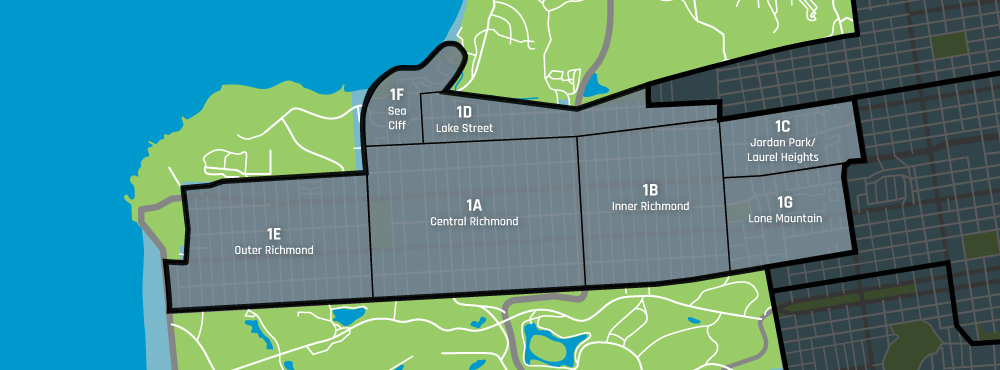
Northwest San Francisco brings together the Richmond District, Sea Cliff, Lake Street, and Jordan Park—neighborhoods connected by wide streets, mature trees, and easy access to some of the city’s most remarkable parks and coastline. While each has its own character, they share a quieter pace that’s shaped as much by the Pacific Ocean and Golden Gate Park as by the homes themselves.
From the neighborhood businesses along Clement Street and Geary Boulevard to the elegant homes of Sea Cliff and the peaceful residential streets of Jordan Park and Lake Street, Northwest San Francisco offers a balance that’s increasingly rare in the city. It’s a district where daily life unfolds at a comfortable rhythm, with beaches, trails, museums, and open space never far from home.
There’s a stretch of Clement Street where the neighborhood shows itself without trying—produce spilling onto the sidewalk, the farmers market humming on weekends, and people picking up groceries they actually plan to cook. It’s practical in the best way, and a reminder that life here is built around routines more than spectacle.
When I’m in the neighborhood, I’ll sometimes grab a hot sandwich at La Promenade Café before wandering Balboa Street or catching a classic film at the Balboa Theatre. Those are the kinds of places that have never needed to reinvent themselves—they’ve simply remained part of the neighborhood’s rhythm.
A few minutes away, the atmosphere changes completely. Riding through Lake Street or Jordan Park, the traffic fades, the streets widen, and the pace slows. Head toward Sea Cliff and it’s hard not to take the long way home. Whether it’s a walk through Lands End, the views from Baker Beach, or standing outside the Legion of Honor as the Pacific stretches to the horizon, this corner of the city has a way of reminding you how closely San Francisco is connected to nature.
That’s what I appreciate most about Northwest San Francisco. It offers both neighborhood life and room to breathe. Even after years of helping clients buy and sell homes here, I still find myself lingering a little longer before heading to the next appointment.
The layers that define the district
What’s Different Here than People Expect?
In the Richmond, the pace of daily life is slower and more deliberate than many expect, shaping buyer and seller behavior in ways newcomers often misread, while long-time residents value the patience and consistency that define the neighborhood.
> Learn More
Produce spilling onto the sidewalk, weekend markets, everyday rhythm
Indie shops, the Balboa Theatre, nights that feel quietly planned
Ocean air, cliffs, and space—where the city drops away
Not an attraction, a release valve—space when the city gets loud
> Explore the Richmond Guide
> See how it compares
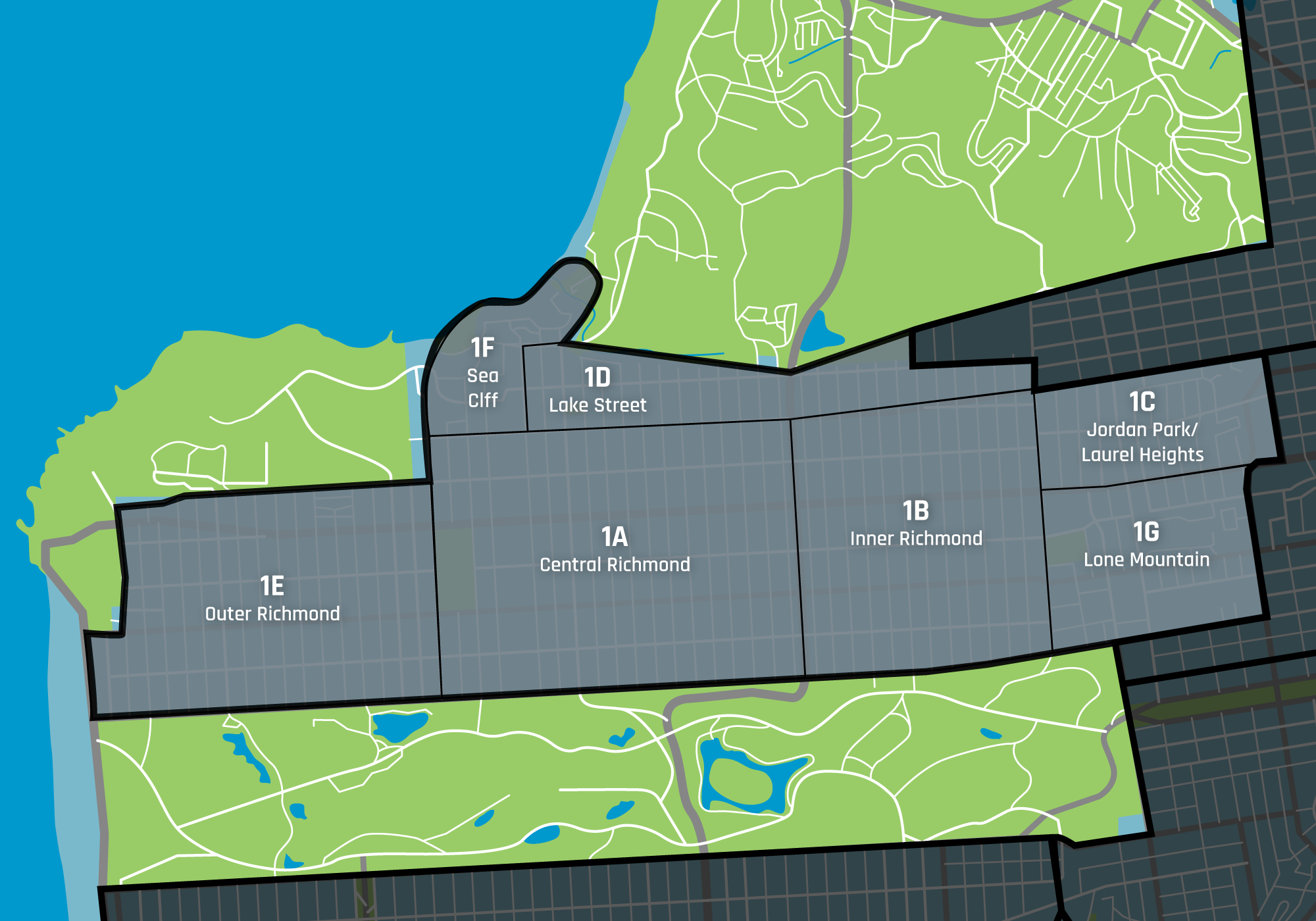
Northwest San Francisco brings together the Richmond District, Sea Cliff, Lake Street, and Jordan Park—neighborhoods connected by wide streets, mature trees, and easy access to some of the city’s most remarkable parks and coastline. While each has its own character, they share a quieter pace that’s shaped as much by the Pacific Ocean and Golden Gate Park as by the homes themselves.
From the neighborhood businesses along Clement Street and Geary Boulevard to the elegant homes of Sea Cliff and the peaceful residential streets of Jordan Park and Lake Street, Northwest San Francisco offers a balance that’s increasingly rare in the city. It’s a district where daily life unfolds at a comfortable rhythm, with beaches, trails, museums, and open space never far from home.
There’s a stretch of Clement Street where the neighborhood shows itself without trying—produce spilling onto the sidewalk, the farmers market humming on weekends, and people picking up groceries they actually plan to cook. It’s practical in the best way, and a reminder that life here is built around routines more than spectacle.
When I’m in the neighborhood, I’ll sometimes grab a hot sandwich at La Promenade Café before wandering Balboa Street or catching a classic film at the Balboa Theatre. Those are the kinds of places that have never needed to reinvent themselves—they’ve simply remained part of the neighborhood’s rhythm.
A few minutes away, the atmosphere changes completely. Riding through Lake Street or Jordan Park, the traffic fades, the streets widen, and the pace slows. Head toward Sea Cliff and it’s hard not to take the long way home. Whether it’s a walk through Lands End, the views from Baker Beach, or standing outside the Legion of Honor as the Pacific stretches to the horizon, this corner of the city has a way of reminding you how closely San Francisco is connected to nature.
That’s what I appreciate most about Northwest San Francisco. It offers both neighborhood life and room to breathe. Even after years of helping clients buy and sell homes here, I still find myself lingering a little longer before heading to the next appointment.
The layers that define the district
What’s Different Here than People Expect?
In the Richmond, the pace of daily life is slower and more deliberate than many expect, shaping buyer and seller behavior in ways newcomers often misread, while long-time residents value the patience and consistency that define the neighborhood.
> Learn More
Produce spilling onto the sidewalk, weekend markets, everyday rhythm
Indie shops, the Balboa Theatre, nights that feel quietly planned
Ocean air, cliffs, and space—where the city drops away
Not an attraction, a release valve—space when the city gets loud
> Explore the Richmond Guide
> See how it compares