
Mission/Bernal Heights/Portrero Hill/Dogpatch/South Beach
Central East San Francisco brings together some of San Francisco’s most actively evolving neighborhoods. Long-established residential areas sit alongside newer developments, while industrial edges and waterfront zones continue to transform. The result is a district where change is visible—sometimes block by block—and where the overall identity is still being defined.
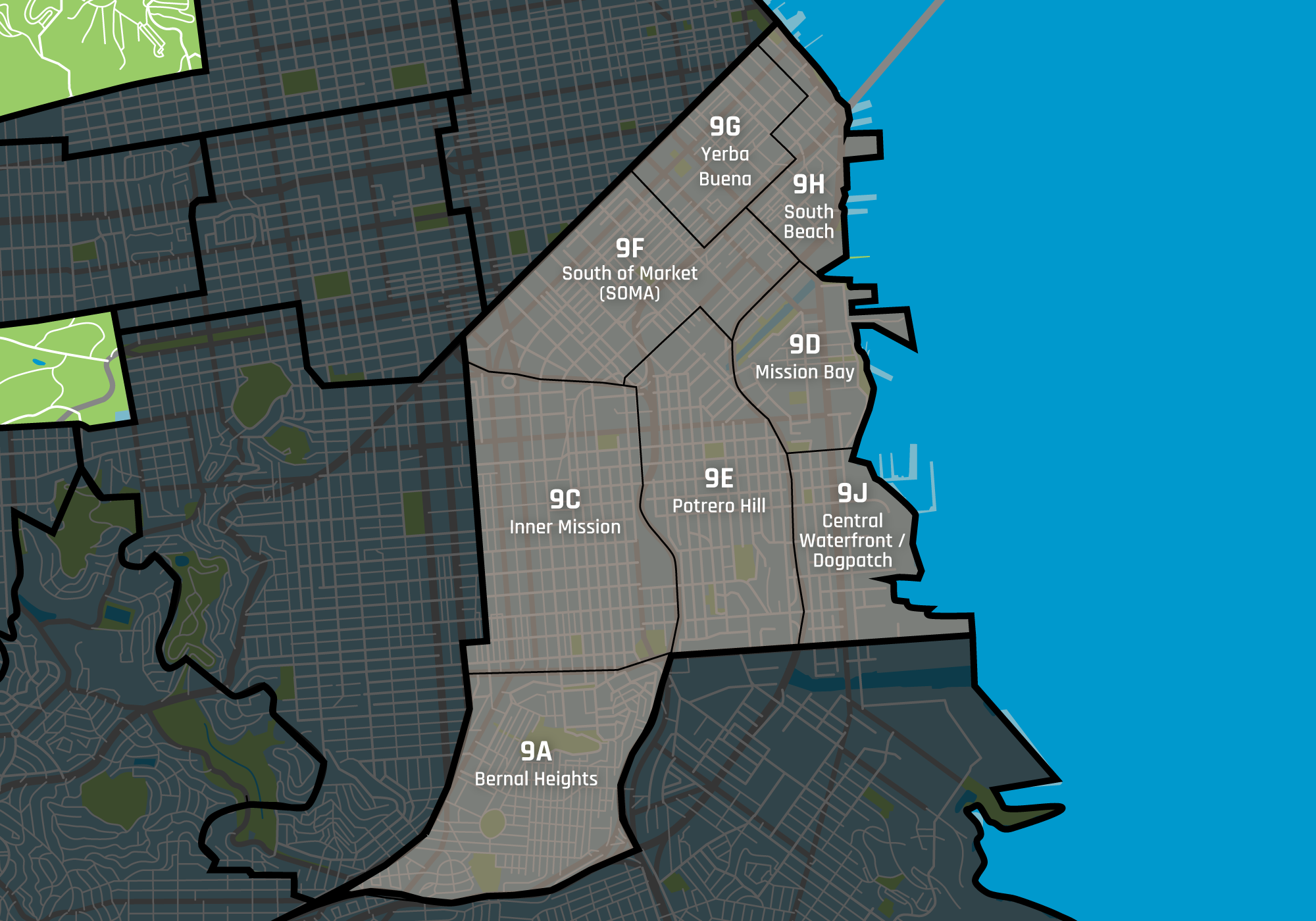
This part of the city doesn’t move at a single pace. In SoMa and Yerba Buena, activity is tied to offices, events, and conventions, creating a rhythm that shifts between weekdays and evenings. Head toward Mission Bay, and the environment feels newer—planned, open, and still filling in.
Along the waterfront, South Beach and Dogpatch introduce a different pattern. The water creates space and light, while development continues to reshape the edges. Some areas feel fully built, while others are clearly still in progress.
Further inland, the tone shifts again. Potrero Hill rises above the surrounding grid, offering more stability and a stronger residential identity, while Bernal Heights—just beyond the district’s southern edge—adds a quieter, more established contrast.
What defines Central East San Francisco isn’t uniformity—it’s the overlap between what’s been built, what’s being built, and what’s still evolving.
South of Market (SOMA) • Yerba Buena
South Beach • Mission Bay • Central Waterfront • Dogpatch
Potrero Hill • Bernal Heights
Inner Mission
Areas that shape the district
The Central Southeast offers access and modern housing stock, but it’s not uniform. Some areas feel established, while others are still in transition, making the exact block and surroundings especially important.
What You Notice Over Time
Newer retail, services, and growing daily infrastructure
Access to downtown, transit, and major city corridors
Walkable edges with views and more open surroundings
Quieter residential streets with a more stable feel
Where Daily Life Happens
And Who Feels at Home Here
Central East San Francisco brings together some of San Francisco’s most actively evolving neighborhoods. Long-established residential areas sit alongside newer developments, while industrial edges and waterfront zones continue to transform. The result is a district where change is visible—sometimes block by block—and where the overall identity is still being defined.
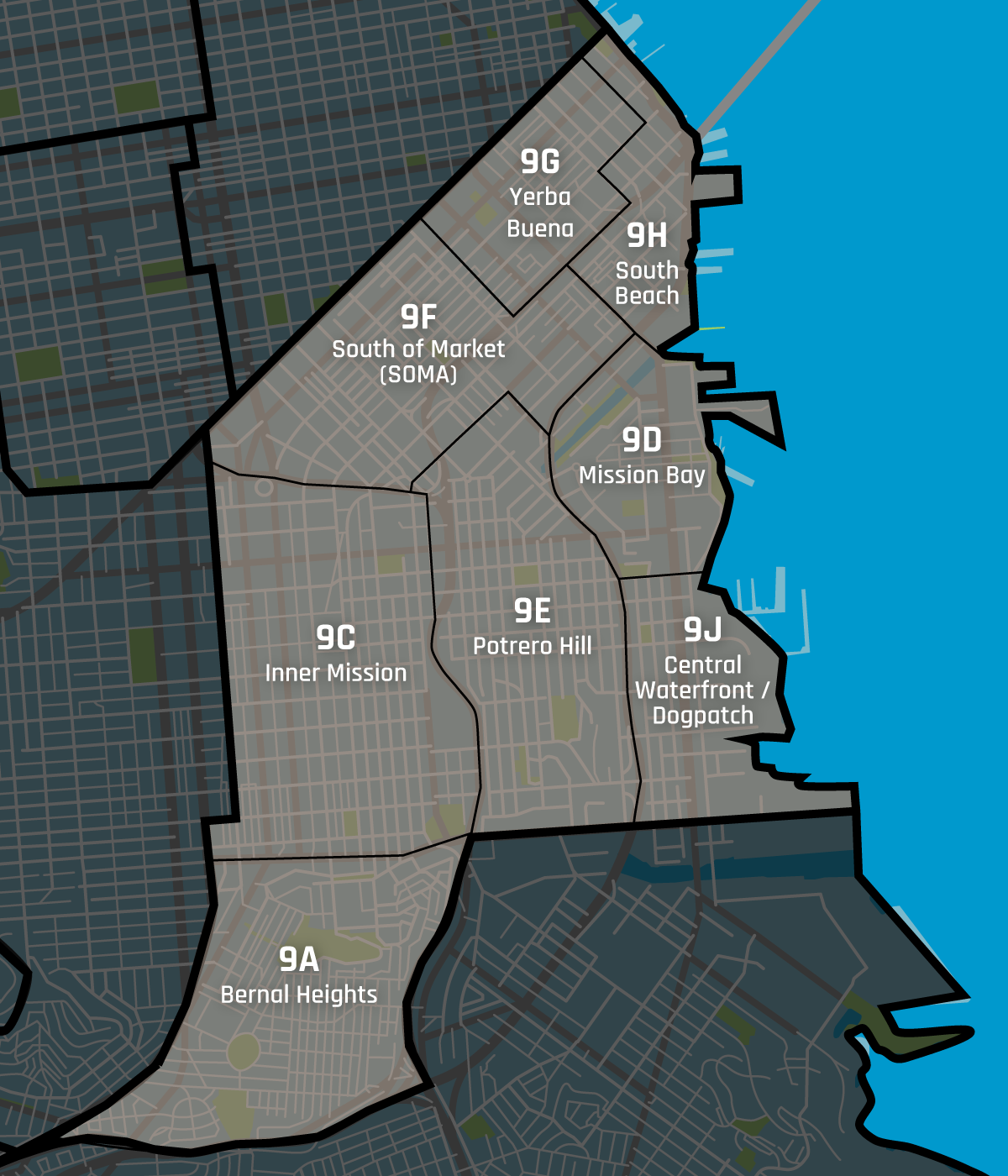
This part of the city doesn’t move at a single pace. In SoMa and Yerba Buena, activity is tied to offices, events, and conventions, creating a rhythm that shifts between weekdays and evenings. Head toward Mission Bay, and the environment feels newer—planned, open, and still filling in.
Along the waterfront, South Beach and Dogpatch introduce a different pattern. The water creates space and light, while development continues to reshape the edges. Some areas feel fully built, while others are clearly still in progress.
Further inland, the tone shifts again. Potrero Hill rises above the surrounding grid, offering more stability and a stronger residential identity, while Bernal Heights—just beyond the district’s southern edge—adds a quieter, more established contrast.
What defines Central East San Francisco isn’t uniformity—it’s the overlap between what’s been built, what’s being built, and what’s still evolving.
South of Market (SOMA) • Yerba Buena
South Beach • Mission Bay • Central Waterfront • Dogpatch
Potrero Hill • Bernal Heights
Inner Mission
Areas that shape the district
The Central Southeast offers access and modern housing stock, but it’s not uniform. Some areas feel established, while others are still in transition, making the exact block and surroundings especially important.
What You Notice Over Time
Newer retail, services, and growing daily infrastructure
Access to downtown, transit, and major city corridors
Walkable edges with views and more open surroundings
Quieter residential streets with a more stable feel
Where Daily Life Happens
And Who Feels at Home Here