The 2026 San Francisco District Survey  ·  District 5

Duboce Triangle

DISTRICT 5J

Waller, Castro, Sanchez and Market. Victorians that survived because nobody bothered to knock them down, two light rail systems, and a park that effectively runs the neighborhood.

WHERE YOU ACTUALLY ARE

A small wedge at the seam of four neighborhoods

Duboce Triangle is one of the City’s most quietly desirable pockets and one of its most misunderstood on a map. Traditionally, the Triangle is bounded by Waller, Castro, Sanchez and Market — a small, tightly drawn wedge sitting at the seam of several larger neighborhoods.

Practically speaking, it borrows from all of them:

  • Hayes Valley to the north and east
  • Eureka Valley and the Castro to the west
  • A little bit of Corona Heights up the hill


Which is a good part of the appeal. You are a few blocks from the Castro, the Lower Haight, the Mission and the Market Street corridor without living on top of any of them. In the San Francisco MLS this is District 5J, and it is small — small enough that in a given year only a couple dozen properties change hands.
Duboce Park Noe St Henry Beaver 14th / 15th Waller Street Castro Street Sanchez Street Market Street Castro & Market Sanchez & Market Hayes Valley → ← Corona Hts ← The Castro The Triangle

Schematic, not to scale. Boundaries as traditionally drawn — Waller, Castro, Sanchez and Market.

The streetscape

Denser than it looks from a car window

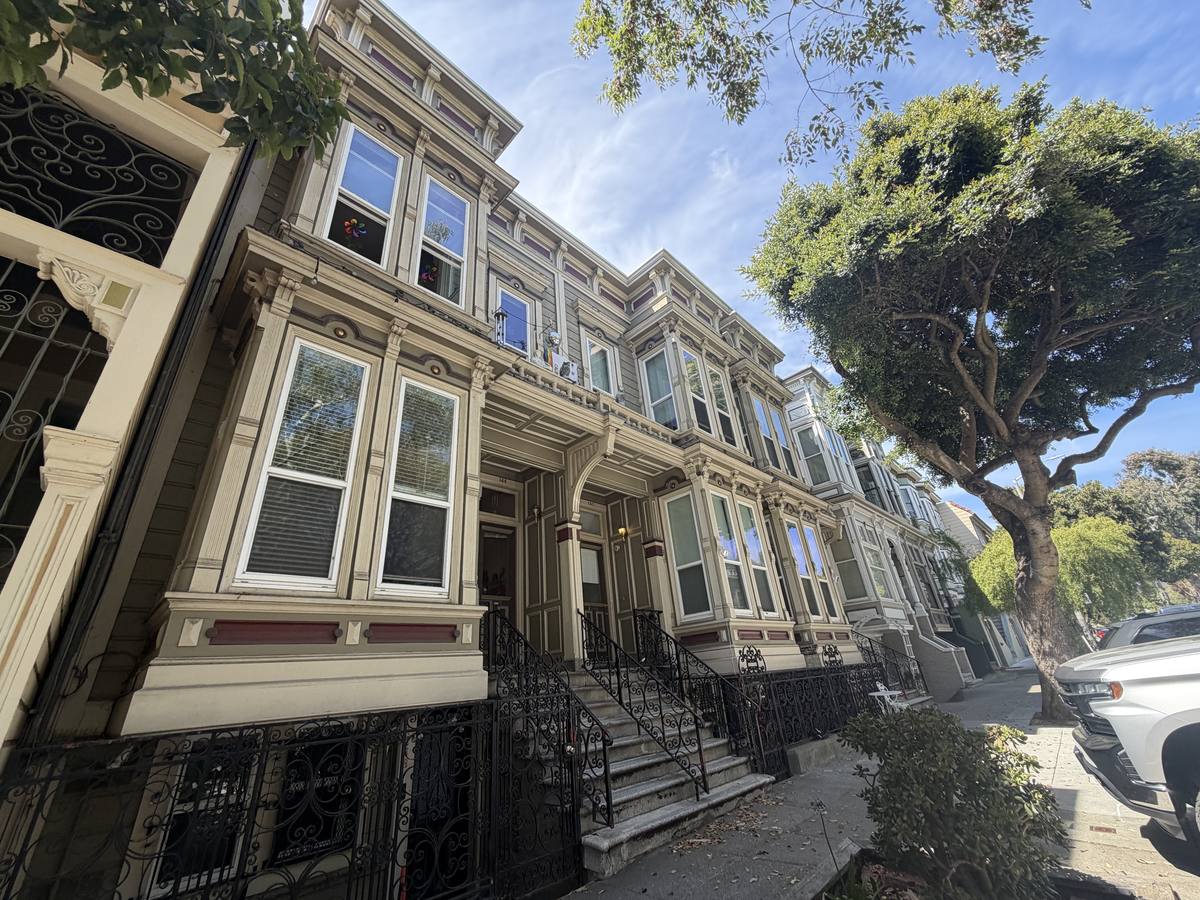
Walk the zero, 100 and 200 blocks of Noe and you get the picture: tree-lined, largely intact, and carrying more units per building than the facades suggest. Many of the buildings you are passing are three-flat structures — which, depending on the building, could be:

  • A multi-unit building with rented apartments
  • Three tenancy-in-common (TIC) interests
  • Three condominiums


That distinction matters enormously to what you can buy, how you finance it and what your exit looks like. Never assume from the facade. Two buildings that look identical from the sidewalk can be entirely different animals in escrow.

Italianate rhythm. Repeated bays down the block, ironwork stoops and a tree canopy doing a lot of quiet work.

Off Noe you get the numbered streets and the small ones: 14th Street, 15th Street, Henry, Beaver and Walter. Each has its own personality.

  • 15th Street is heavily tree-covered and feels sheltered
  • 14th Street is a working thoroughfare, racing east toward Guerrero and the Mission
  • Henry and Beaver are charmers — quiet, narrow, and consistently among the most desired addresses in the Triangle
  • Walter has a great vibe and real architectural variation


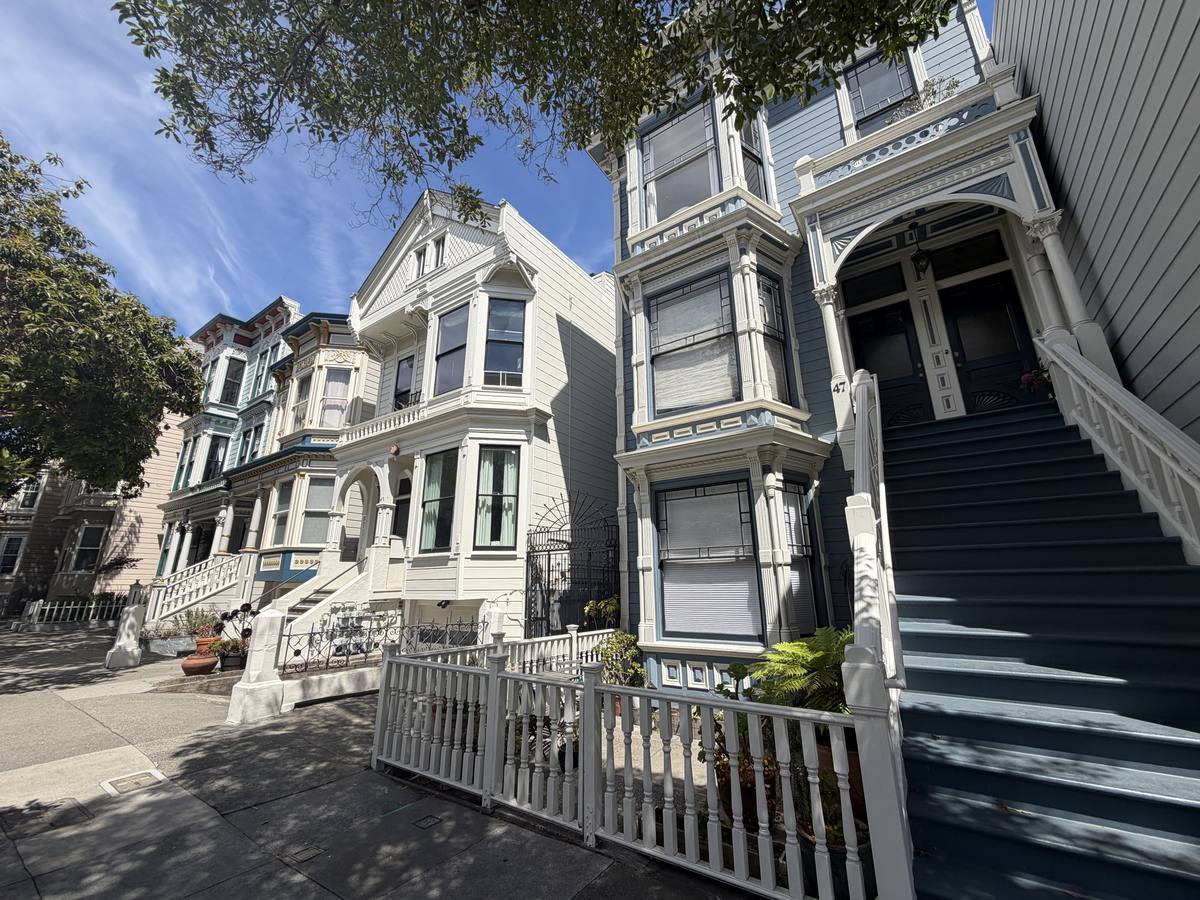
Sidewalks range from about three squares wide to six, depending on the block. You are also unlikely to see overhead power lines out front — most have been undergrounded or are fed from the rear, which does a lot for how these streets feel and how they photograph.

ONE STREET-LEVEL NOTE

Noe was designated a slow street during the pandemic, from Duboce to Market. One consequence: a fair amount of bicycle traffic shifted over to Sanchez, right past the fire station. Sanchez also sits over a high water table, which is a polite way of saying that on certain days it can get a little ripe.

You will see cars parked perpendicular to the curb on some blocks. Parking is at a premium, full stop.

A row that survived. White, blue and pink Victorians in sequence behind a picket fence — and note the power lines conspicuously absent out front.

The architecture

Victorian country, confidently painted

This is Victorian country, and much of it has been lovingly restored. Expect:

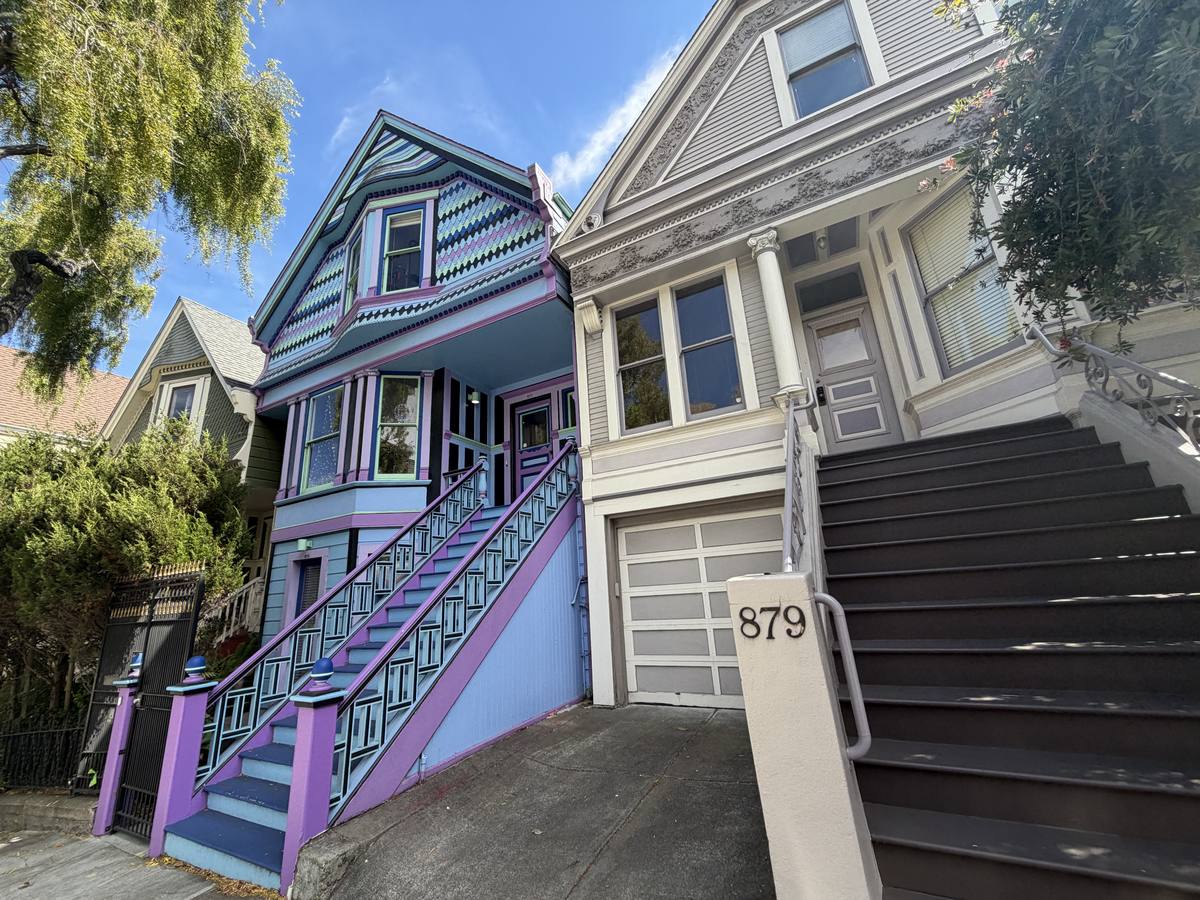
  • Elaborate paint schemes — some of the most confident color work in the City, from a tasteful three-color job to full technicolor
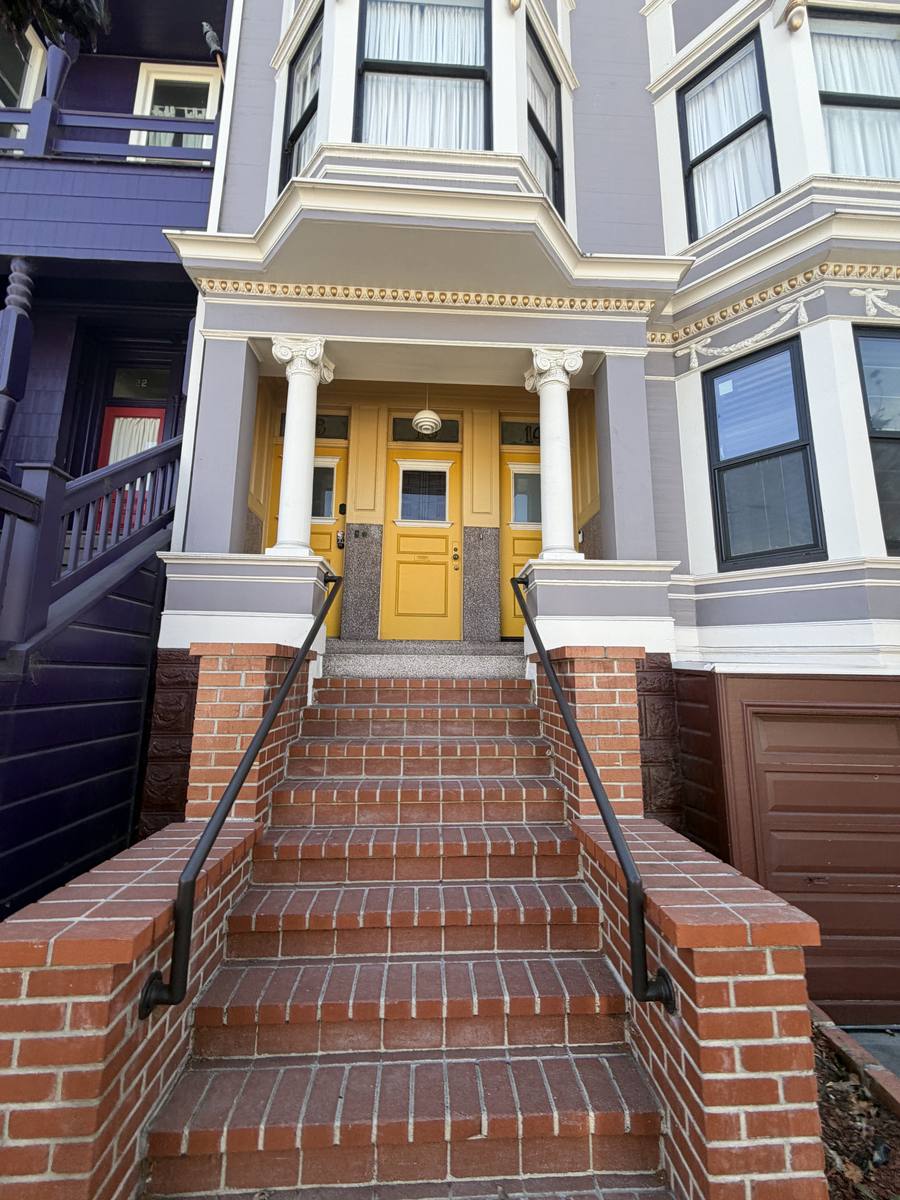
  • Ornamental detail — brackets, dentils, corbels, plaster capitals, Corinthian columns on entry porticos
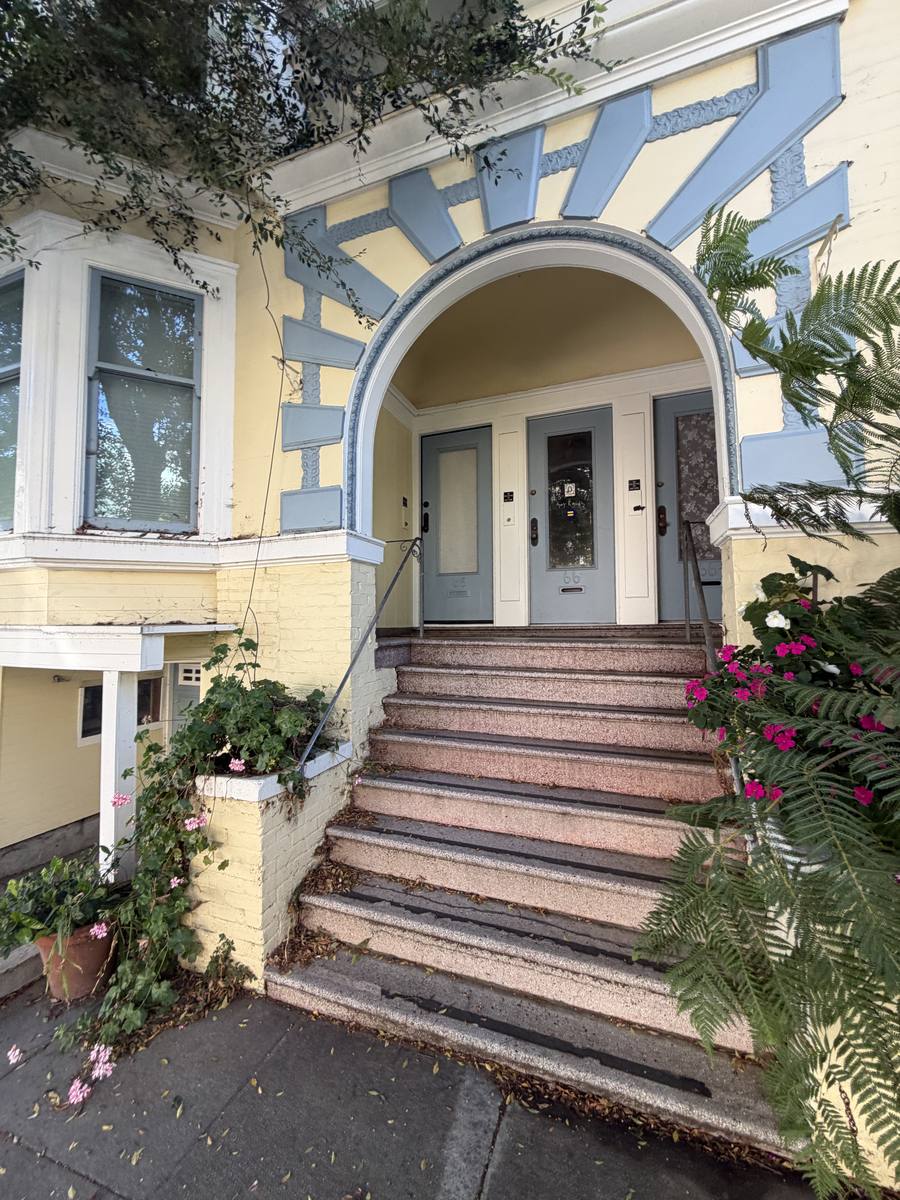
  • Terrazzo and granite entry steps, arched entryways, grouped front doors under a single arch
  • Tall Victorian windows and, on some homes, curved bay glass
  • Tall ceilings and double- or even triple-parlor layouts on the main level
  • Stucco-coated and skimmed facades — a mid-century maintenance-reduction move that hid a lot of original detail, some of which has since been brought back
  • Modern reinterpretations of the Victorian form, done well and done poorly, sometimes on the same block

Color as a statement. The Triangle does not do timid paint. Note the garage on the neighboring building — and the height difference between the two entries.

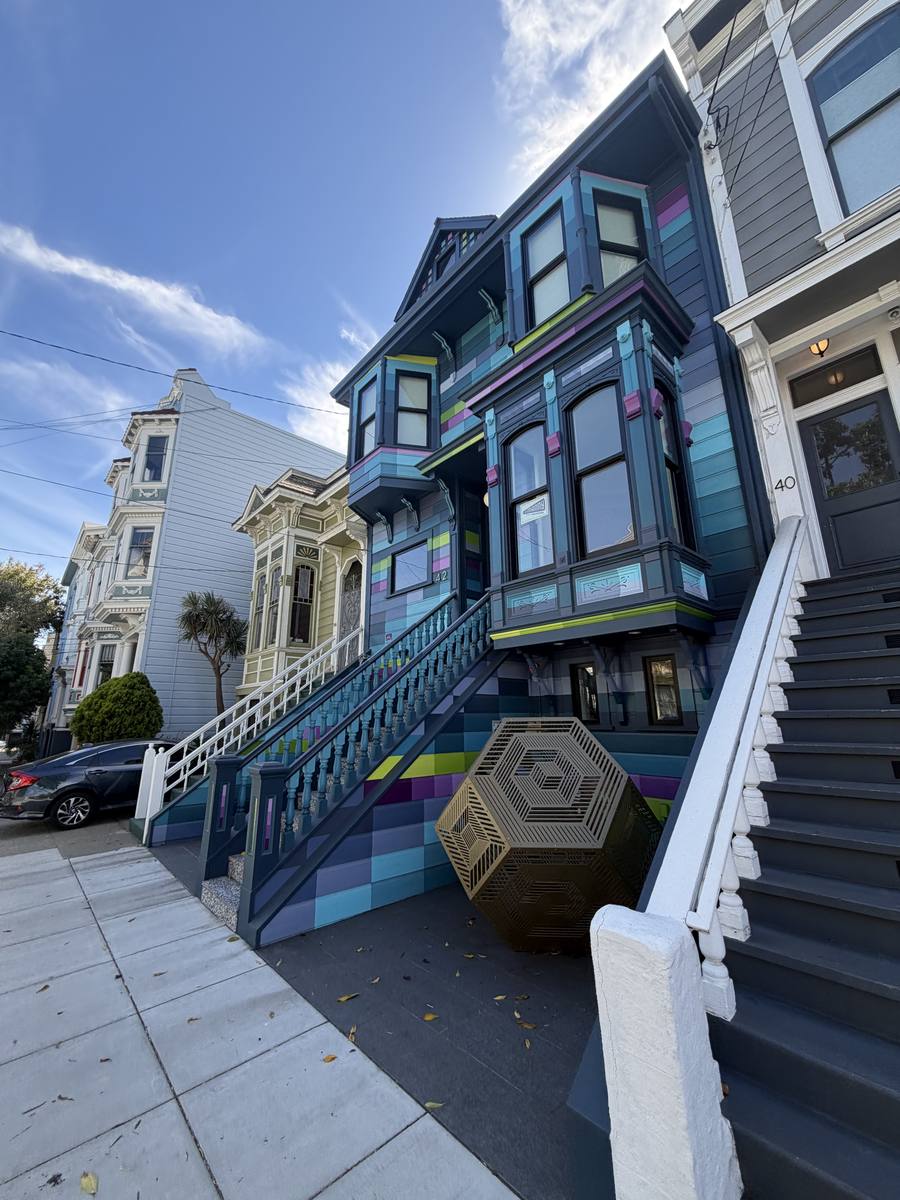
A modern take on a Victorian body. Original bay geometry, entirely contemporary color blocking. The block absorbs it.

Two practical points:

  • Much of this sits within a historic context. If you want double-pane glass, plan on a careful, well-documented replacement process rather than a weekend at the window store. It can be done. It is not casual.
  • Half addresses everywhere. These buildings have been carved and re-carved into units over a century-plus. A “½” in the address is a clue about the building’s history, and usually about its legal structure too.

Under the arch. Grouped front doors, terrazzo steps, geraniums and ferns. A classic Triangle entry sequence.

Brick and Corinthian columns. Two front doors, one portico — and a garage tucked in at right, which is rarer here than you would think.

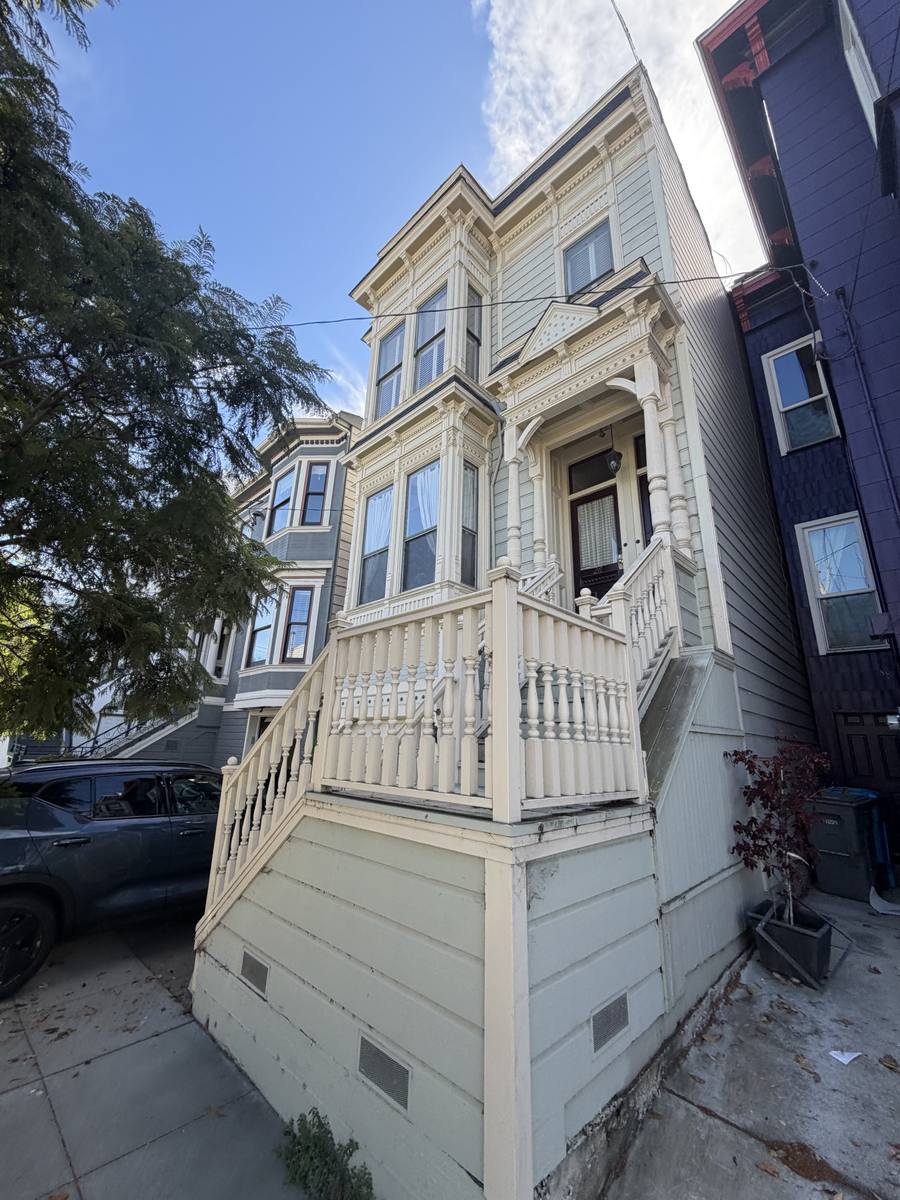
Restored and detailed. Turned balustrade porch, bracketed cornice, stacked bays. This is what careful restoration looks like.

About garages

You will see openings that look like they were, or could be, garages. Do not count on it.

Adding a garage in this part of the City today is realistically an $800,000 to $1 million-plus proposition — and construction is only part of it. The permitting path, the clearances and the cascade of related upgrades are what get you: sprinklers, updated electrical and plumbing connections, HVAC, and structural work you did not plan on.

The counterweight: this is one of the most walkable neighborhoods in the City. That is one of its main draws. Plenty of people here genuinely do not need a car. Plenty of others want a space anyway. Both positions are defensible — just price the decision honestly before you buy.

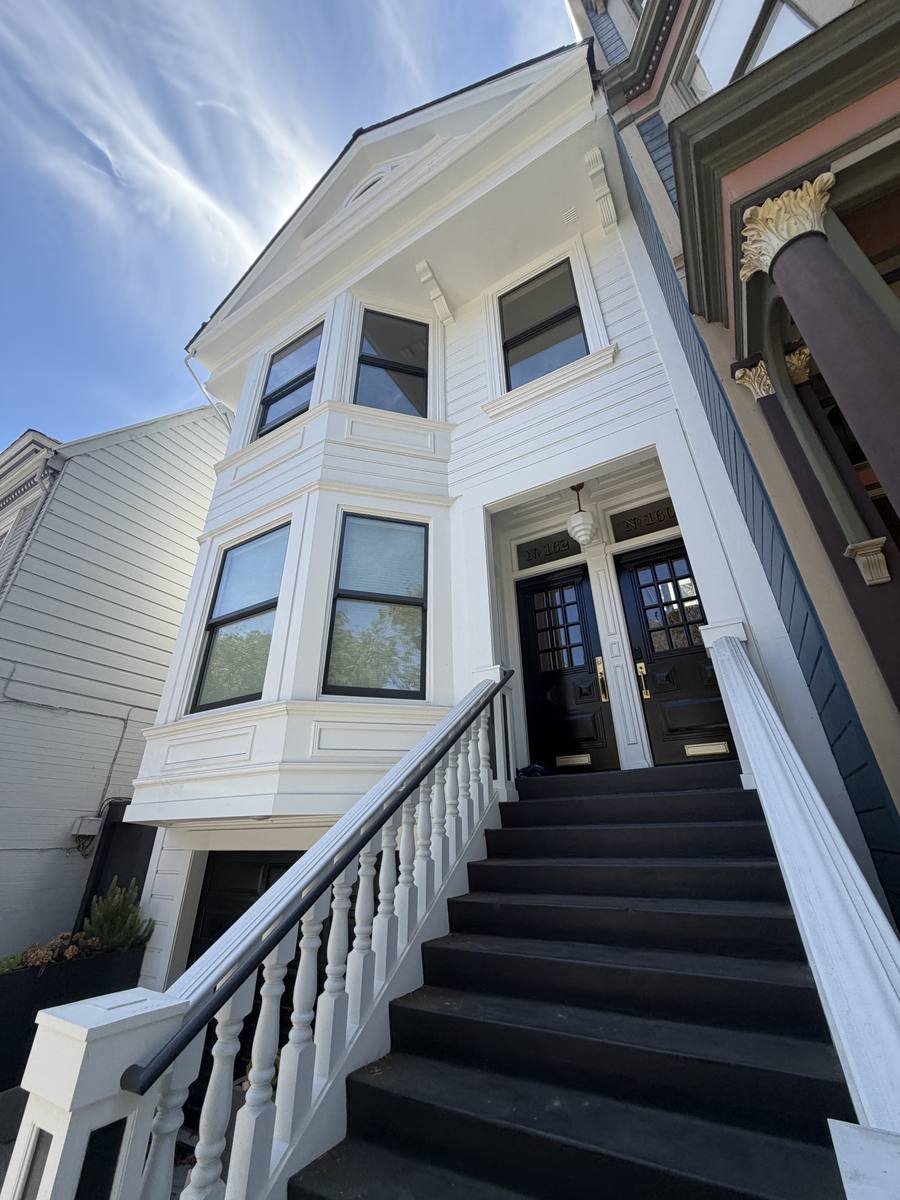
No. 160 and No. 162. A crisply restored two-flat with garage below — tall bays, black sash, restrained palette.

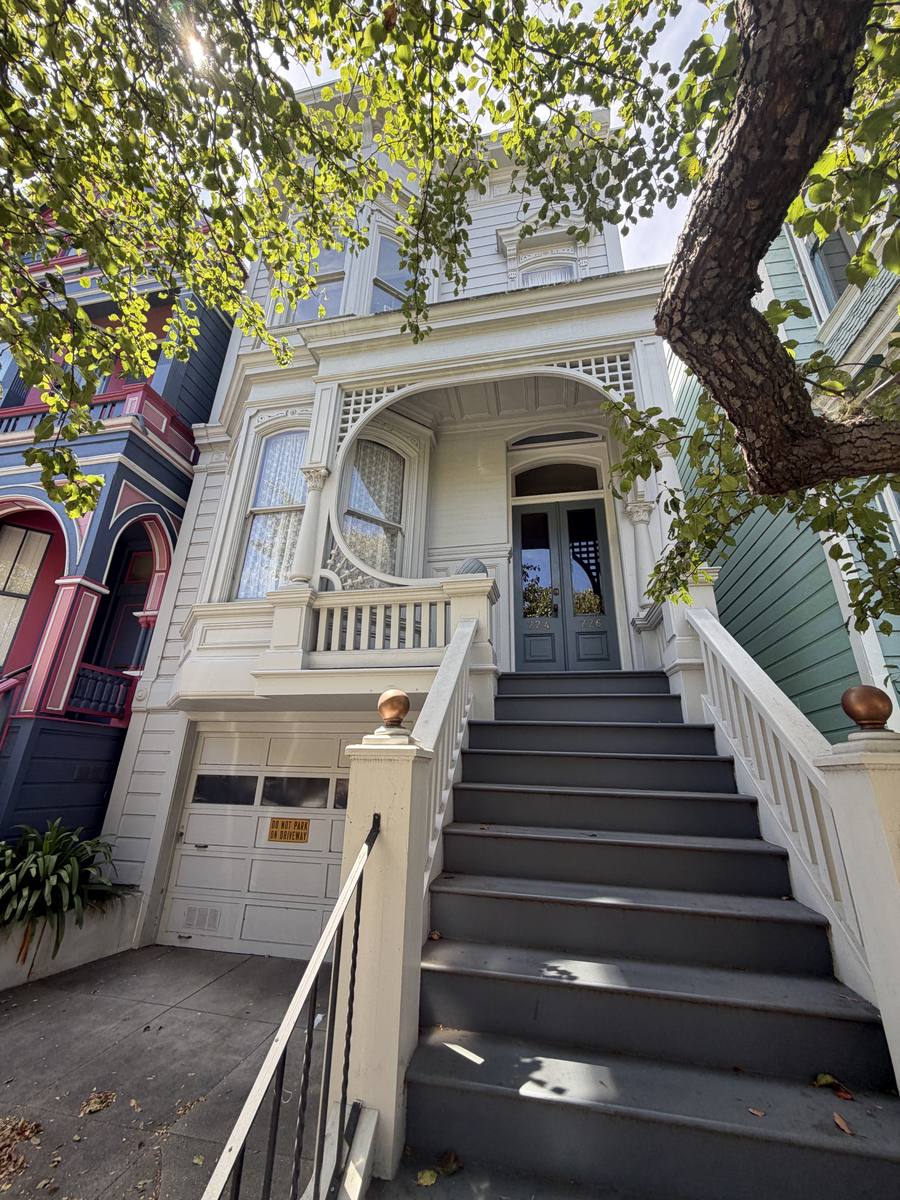
224 and 226. A recessed entry porch with lattice detail and a garage below, framed by street trees. The full Triangle package.

Duboce Park

The reason people move in and never leave

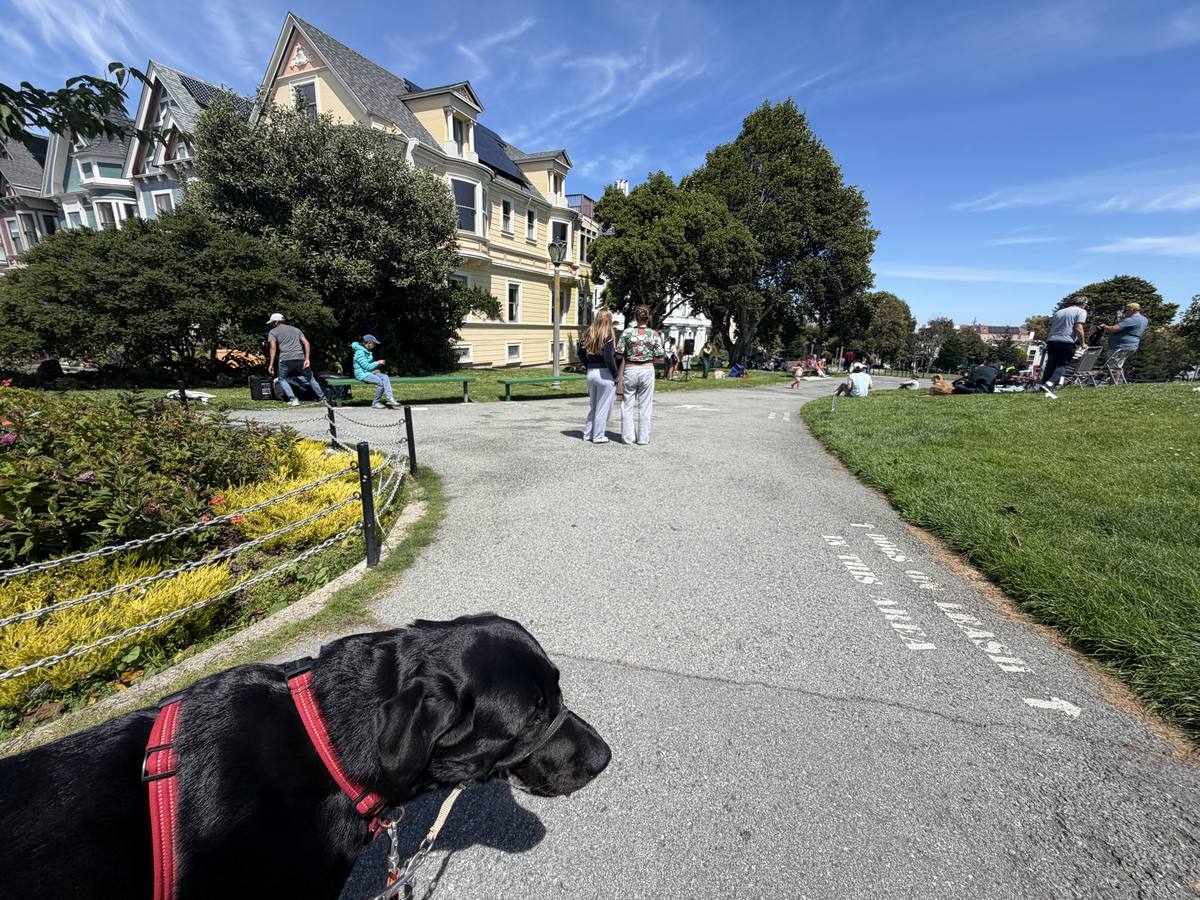
Duboce Park — named for Victor Duboce, a Spanish-American War general — is the crown jewel here.

  • The park is divided into on-leash and off-leash sections, and residents treat it as an extension of their backyards
  • Three streets come directly off the dog run and playground area — Carmelita, Potomac and Pierce — and they are especially sought after
  • From the top of the park you get skyline views toward downtown
  • On a Sunday afternoon it fills with people from every walk of life, puppies in tow, and it is genuinely social — people talk to each other here

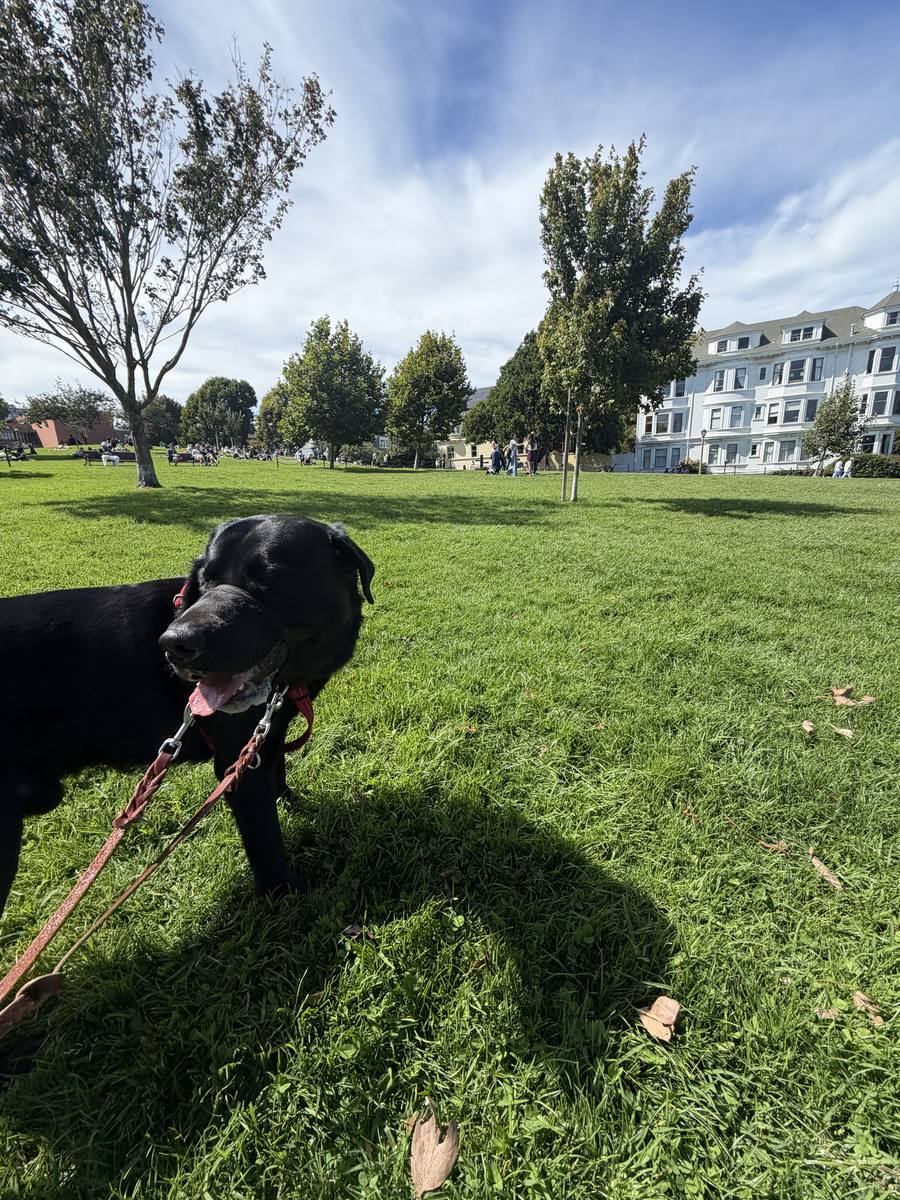
Mr. Radu holds court at Duboce Park. The lawn on a good day, with the Victorians along the north edge behind him.

“Dogs on leash in this area.” The park is divided, and the divisions are taken seriously. This path is the main artery between the two.

A few honest caveats:

  • It gets windy. On days when the coast is cool and inland is warm, the park funnels a stiff breeze — Karl the Fog’s calling card. The berm gives a little shelter; not much
  • The grass gets rotated. In winter and after wet stretches, sections are fenced off for turf maintenance
  • Most people are conscientious about cleanup, but do not be shocked by the occasional squishy surprise


Also in the immediate orbit: McKinley Elementary and Sutter CPMC’s Davies campus.

Transit

This is the sleeper advantage of the Triangle, and for a lot of buyers it is the whole ballgame. From within a few blocks you can reach:

  • The N Judah, running from Ocean Beach through downtown and out to Mission Bay
  • The K, L and M lines along the Market Street corridor
  • The J Church, closest to the Church Street Safeway complex


Two MUNI light rail corridors within a short walk is rare in the City. Combine that with the walkability and you understand why the neighborhood holds value the way it does.

It is really only in the last 20 to 30 years that this became a place people specifically targeted. The "triangle" in the name once carried a very different connotation.

Talk to longtime residents at an open house or at the park — and they will talk to you — and you learn the Triangle was not always this. That history is worth knowing for two reasons. It explains the housing stock: a lot of buildings survived precisely because nobody was tearing them down in the boom years. And it is a reminder that neighborhood reputations in the City are not permanent.

WHAT HAS ACTUALLY BEEN SELLING

District 5J closed sales

Source: Kevin Ho's own San Francisco MLS export. Closed sales, February 2024 through February 2026. 52 total closings across two years — a small submarket. Single-family homes, condominiums and TICs are reported separately and never blended.

Condominium

38 closed sales — the core of the market

$1,363,500

Median sale price

Range
$655,000 – $3,150,000
Closed over list
20 of 38
Median over list
$3,000
Most common
2 bedroom (22)

Tenancy in Common

8 closed sales

$1,052,500

Median sale price

Range
$755,000 – $1,849,000
Closed over list
4 of 8
Median over list
$20,000
Versus condos
Real discount

Small sample — directional only

Single-Family Home

5 closed sales — genuinely rare here

$3,229,000

Median sale price

Range
$2,525,000 – $3,350,000
Closed over list
2 of 5
Top closing
22 Beaver, $3,350,000
Also notable
146 Henry, $3,289,500

Small sample — directional only

ON PRICE PER SQFT The MLS export does not carry a reliable living-area field for these properties, so I am not publishing a $/sqft figure for District 5J. I would rather give you nothing than give you a number I had to invent.
ON DAYS ON MARKET MLS median days on market is distorted by relisting activity and is not a figure I publish. For a well-priced property here, genuine public market exposure has been running under two weeks.
What the numbers mean

Read by property type, not by average

If you own a single-family house in the Triangle, you own something scarce and you will be paid for it — but you will be paid on the merits of your specific house, not on a neighborhood average. The two largest homes in the data both closed below their asking prices, which tells you these are priced case by case rather than by formula. The City’s development emphasis has been on multi-family housing, which makes an intact single-family home here rarer over time and also shapes what you are permitted to do if you want to remodel one.

If you are buying a condo, this is currently a market where being well-priced matters more than being aggressive. The days of automatic escalation are not what they were, and the spread between a smartly priced unit and an optimistically priced one shows up plainly in the closing data.

If you are considering a TIC, understand the discount you are receiving and why. It is real value for the right buyer with the right time horizon and the right lender. It is a difficult fit for someone who needs flexibility.

THE BOTTOM LINE

Duboce Triangle gives you Victorian architecture, two light rail corridors, a genuinely great park and a walkable, social, small-scale neighborhood at the intersection of four bigger ones. What it does not give you easily is parking, a garage, or a single-family house.

Every building here is its own case — three units behind one facade can be three different legal structures, and the difference is worth six figures and a lot of sleep. That is the part worth getting right before you write an offer.

Kevin Ho · Team K.Ho, Vanguard Properties

kevin@vanguardsf.com · 415.297.7462 · team-kho.com · CA DRE #01875957

Part of the 2026 Team K.Ho San Francisco District Survey. Sales figures drawn from Kevin Ho's own San Francisco MLS exports and current through February 2026; the survey is updated as new closings post. Every property and every building is different — nothing here is a substitute for advice on your specific situation.