
Forest Knolls/West Portal/Diamond Heights/St. Francis Wood
West Portal, St. Francis Wood, and Diamond Heights represent some of San Francisco’s most distinctive residential neighborhoods, each offering its own character while sharing easy access to the city’s west side. Just beyond them, Miraloma Park follows a quieter rhythm, defined by rolling terrain, mid-century homes, and streets that curve naturally with the hillside. Views open unexpectedly, daily life tends to stay local, and the physical landscape still sets the tone.
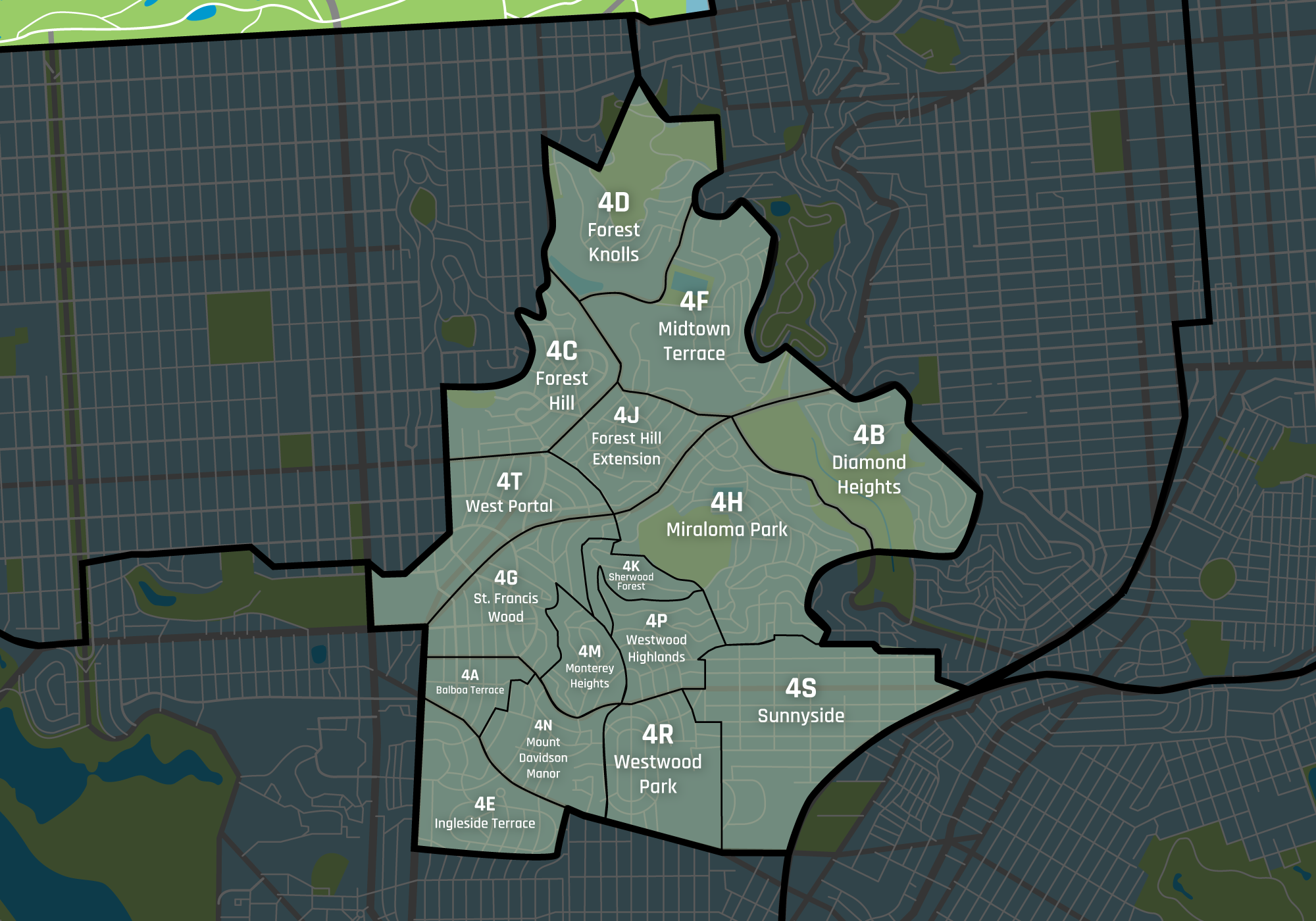
Twin Peaks West is shaped by the city’s terrain more than its street grid. Across neighborhoods like Miraloma Park, Forest Knolls, Diamond Heights, West Portal, and St. Francis Wood, hillsides influence everything from street patterns and home design to views, light, and the pace of daily life. Rather than feeling like a single neighborhood, the district unfolds as a collection of distinct residential enclaves connected by the landscape.
Miraloma Park reflects that character particularly well. Streets like Marietta Drive and Molimo Drive bend and climb with the hillside, creating quiet pockets of homes that feel tucked away despite their central location. Nearby, Miraloma Playground serves as a natural gathering place, while Portola Drive provides the primary connection through the district before the neighborhood gives way to the greener slopes surrounding O’Shaughnessy Boulevard.
Throughout Twin Peaks West, the appeal isn’t defined by shopping districts or heavy foot traffic. Instead, it comes from spacious residential streets, enduring neighborhood character, and a setting where the topography continues to shape both the homes and the experience of living there.
Forest Hill • Forest Hill Extension • Forest Knolls • West Portal
Miraloma Park • Sherwood Forest
Diamond Heights
Mount Davidson Manor • Westwood Highlands • Westwood Park • Sunnyside • Ingleside Terrace • Ingleside • Monterey Heights • St. Francis Wood • Balboa Terrace
Areas that shape the Southwest
Miraloma Park trades walkability for space and consistency. Most movement happens by car, but in return, the neighborhood avoids the turnover and variability seen in denser parts of the city.
What You Notice Over Time
Central open space and informal neighborhood anchor
Primary route for errands, commuting, and access to surrounding areas
Scenic edge with a quieter, more natural feel
Residential streets that define the neighborhood’s character
Where Daily Life Happens
And Who Feels at Home Here
West Portal, St. Francis Wood, and Diamond Heights represent some of San Francisco’s most distinctive residential neighborhoods, each offering its own character while sharing easy access to the city’s west side. Just beyond them, Miraloma Park follows a quieter rhythm, defined by rolling terrain, mid-century homes, and streets that curve naturally with the hillside. Views open unexpectedly, daily life tends to stay local, and the physical landscape still sets the tone.
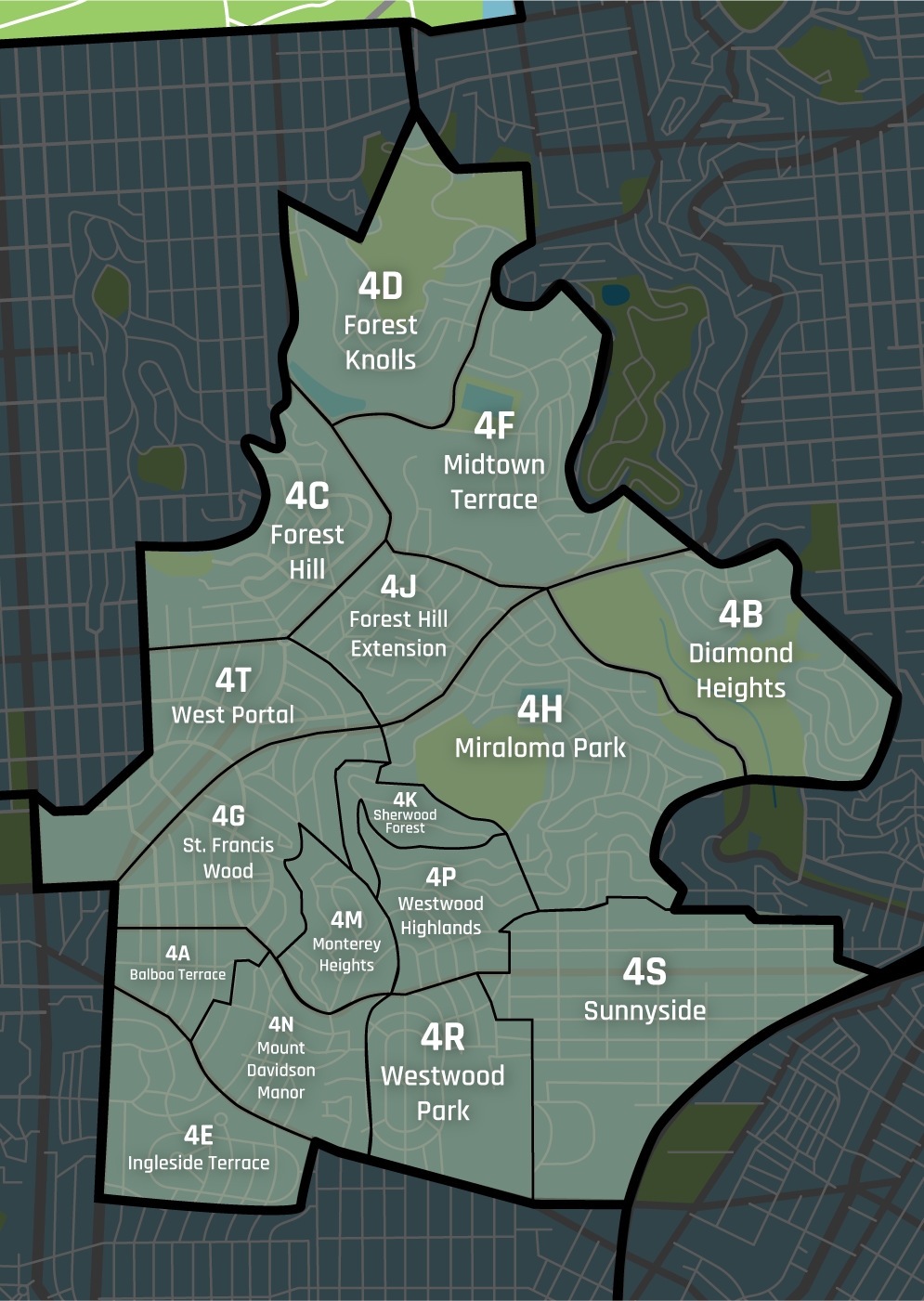
Twin Peaks West is shaped by the city’s terrain more than its street grid. Across neighborhoods like Miraloma Park, Forest Knolls, Diamond Heights, West Portal, and St. Francis Wood, hillsides influence everything from street patterns and home design to views, light, and the pace of daily life. Rather than feeling like a single neighborhood, the district unfolds as a collection of distinct residential enclaves connected by the landscape.
Miraloma Park reflects that character particularly well. Streets like Marietta Drive and Molimo Drive bend and climb with the hillside, creating quiet pockets of homes that feel tucked away despite their central location. Nearby, Miraloma Playground serves as a natural gathering place, while Portola Drive provides the primary connection through the district before the neighborhood gives way to the greener slopes surrounding O’Shaughnessy Boulevard.
Throughout Twin Peaks West, the appeal isn’t defined by shopping districts or heavy foot traffic. Instead, it comes from spacious residential streets, enduring neighborhood character, and a setting where the topography continues to shape both the homes and the experience of living there.
Forest Hill • Forest Hill Extension • Forest Knolls • West Portal
Miraloma Park • Sherwood Forest
Diamond Heights
Mount Davidson Manor • Westwood Highlands • Westwood Park • Sunnyside • Ingleside Terrace • Ingleside • Monterey Heights • St. Francis Wood • Balboa Terrace
Areas that shape the Southwest
Miraloma Park trades walkability for space and consistency. Most movement happens by car, but in return, the neighborhood avoids the turnover and variability seen in denser parts of the city.
What You Notice Over Time
Central open space and informal neighborhood anchor
Primary route for errands, commuting, and access to surrounding areas
Scenic edge with a quieter, more natural feel
Residential streets that define the neighborhood’s character
Where Daily Life Happens
And Who Feels at Home Here