
Noe Valley/Castro/Haight-Ashbury/Glen Park/Cole Valley/Mission Dolores
Central San Francisco is less a single neighborhood and more a convergence point. Within a relatively compact area, the city shifts repeatedly—commercial corridors give way to residential blocks, flat streets rise into hills, and each neighborhood carries a distinct character. What ties it together is proximity: everything is close, but nothing feels the same.
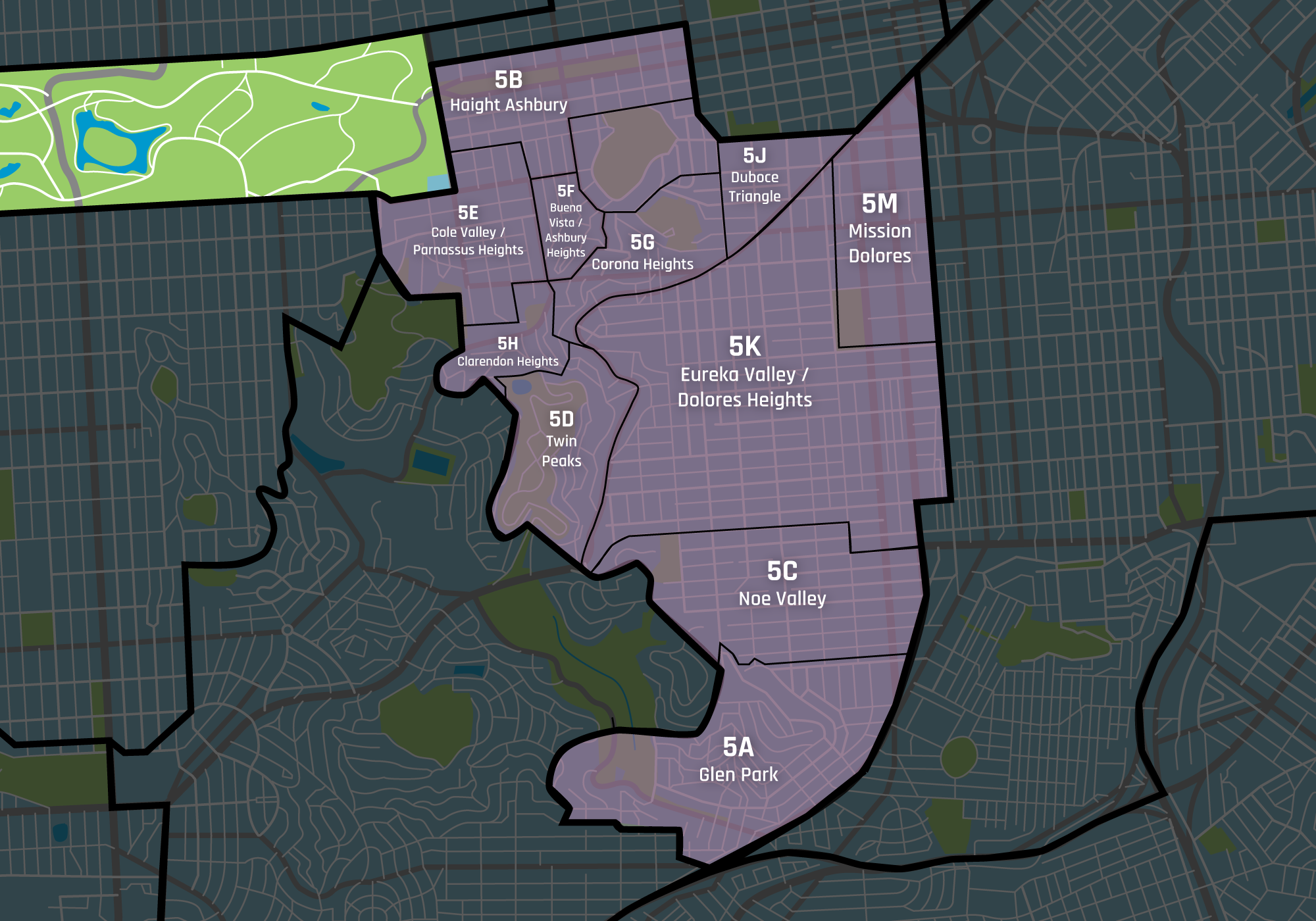
Movement through Central San Francisco is constant, but not uniform. Along Market Street and its surrounding corridors, activity is steady and visible—transit, retail, and foot traffic intersect in a way that keeps the area active throughout the day.
Just a few blocks away, the tone shifts. In Noe Valley, streets feel residential and self-contained, while nearby Eureka Valley and the Castro bring a more social, outward-facing energy. Head north, and Hayes Valley introduces a more curated, design-forward feel, while Duboce Triangle sits in between—quieter, but still connected.
The terrain plays a role as well. Twin Peaks and Corona Heights rise above the grid, creating separation and views that contrast with the flatter, more navigable sections below.
It’s a part of the city where contrast is constant, and where proximity allows for a range of lifestyles within a short distance.
Hayes Valley • Duboce Triangle
Haight-Ashbury • Cole Valley / Parnassus Heights
Eureka Valley / Dolores Heights • Mission Dolores
Noe Valley • Glen Park
Twin Peaks • Corona Heights • Clarendon Heights
Areas that shape the district
Central SF offers variety, but that comes with overlap. Traffic, density, and activity levels shift quickly depending on where you are, and choosing the right micro-location matters more here than in most parts of the city.
What You Notice Over Time
Transit, shopping & neighborhood connections
Restaurants, nightlife & local character
Walkable retail & neighborhood services
Boutiques, dining & independent shops
Where Daily Life Happens
And Who Feels at Home Here
Central San Francisco is less a single neighborhood and more a convergence point. Within a relatively compact area, the city shifts repeatedly—commercial corridors give way to residential blocks, flat streets rise into hills, and each neighborhood carries a distinct character. What ties it together is proximity: everything is close, but nothing feels the same.
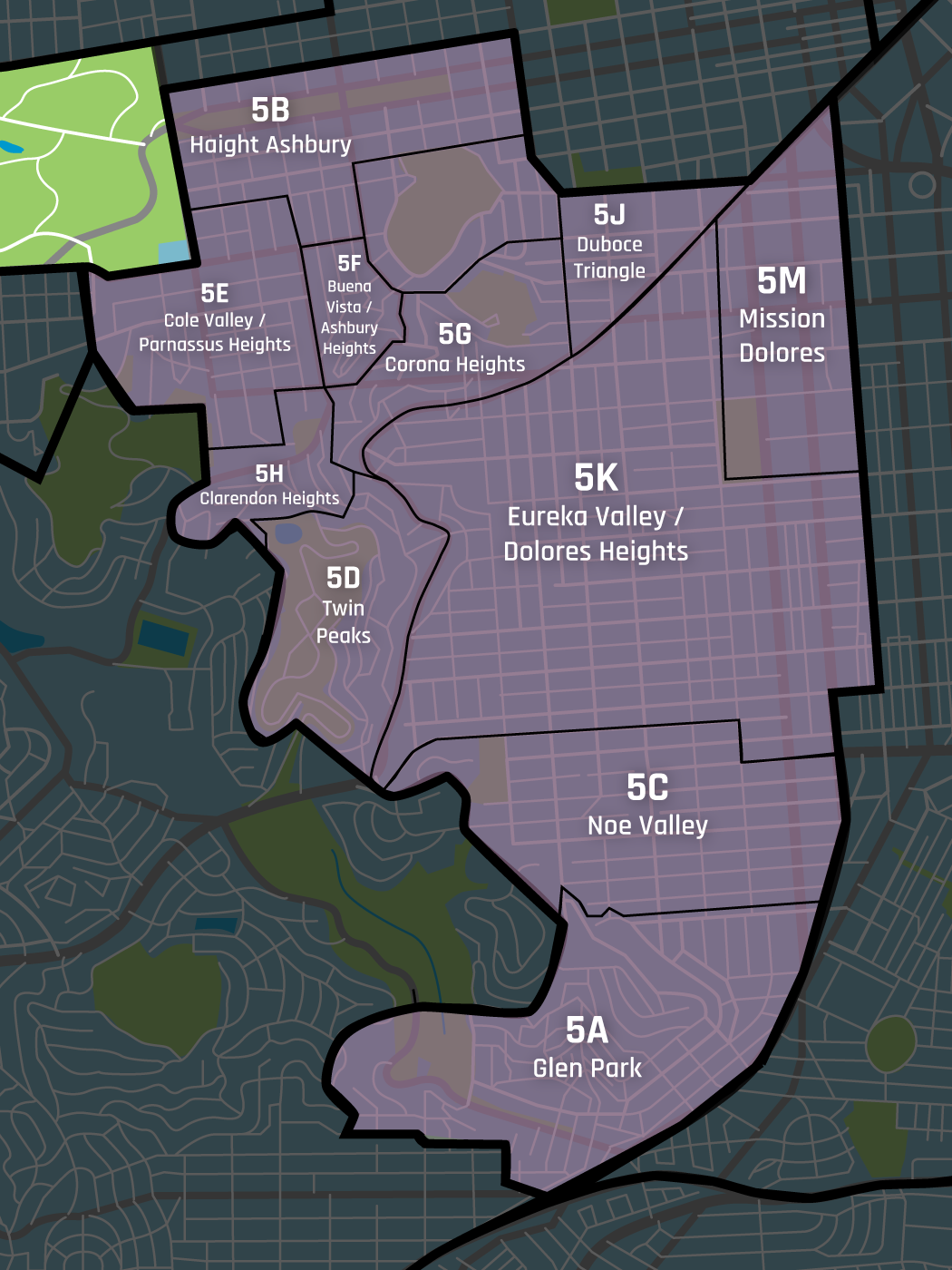
Movement through Central San Francisco is constant, but not uniform. Along Market Street and its surrounding corridors, activity is steady and visible—transit, retail, and foot traffic intersect in a way that keeps the area active throughout the day.
Just a few blocks away, the tone shifts. In Noe Valley, streets feel residential and self-contained, while nearby Eureka Valley and the Castro bring a more social, outward-facing energy. Head north, and Hayes Valley introduces a more curated, design-forward feel, while Duboce Triangle sits in between—quieter, but still connected.
The terrain plays a role as well. Twin Peaks and Corona Heights rise above the grid, creating separation and views that contrast with the flatter, more navigable sections below.
It’s a part of the city where contrast is constant, and where proximity allows for a range of lifestyles within a short distance.
Hayes Valley • Duboce Triangle
Haight-Ashbury • Cole Valley / Parnassus Heights
Eureka Valley / Dolores Heights • Mission Dolores
Noe Valley • Glen Park
Twin Peaks • Corona Heights • Clarendon Heights
Areas that shape the district
Central SF offers variety, but that comes with overlap. Traffic, density, and activity levels shift quickly depending on where you are, and choosing the right micro-location matters more here than in most parts of the city.
What You Notice Over Time
Transit, shopping & neighborhood connections
Restaurants, nightlife & local character
Walkable retail & neighborhood services
Boutiques, dining & independent shops
Where Daily Life Happens
And Who Feels at Home Here